
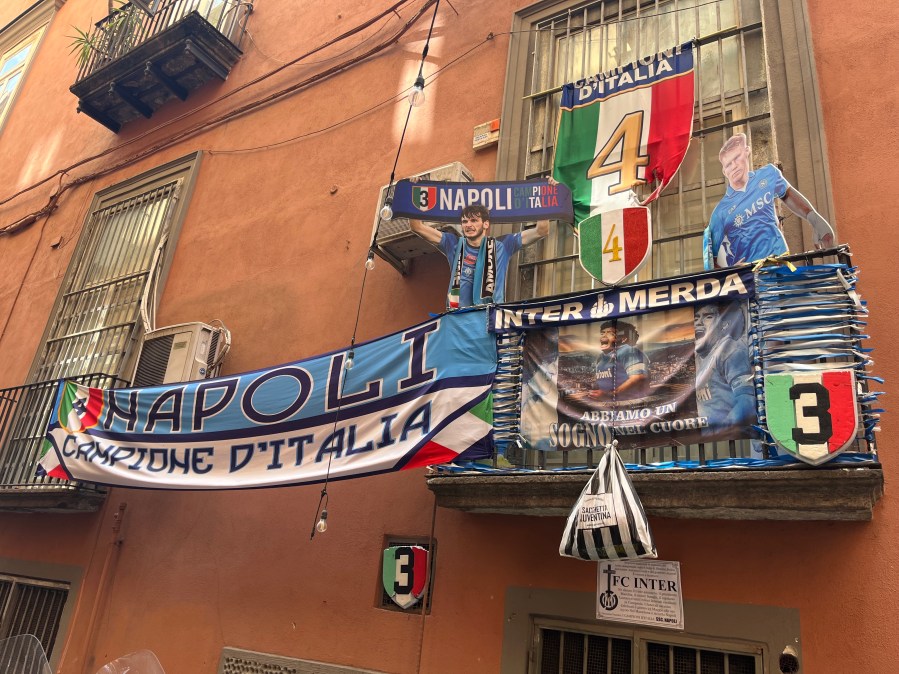
(In this blog entry, I am going to use both Naples and Napoli interchangeably)
*
In Italian, the word vespa means ‘wasp’.
In Naples, the Vespa rules the roads; motor-wasps darting around and causing people to jump out of the way in alarm, warned by the ever-present revving and droning in the air.
Seconds after leaving our apartment for the first time on the main road of Corso Umberto I in the Centro Storico of Napoli, a Vespa crashed into the back of a car, halting traffic, which allowed us to cross the chaotic road but resulted in both drivers having to swap details. We took this as an early warning to be extra-mindful when crossing the roads in Naples.
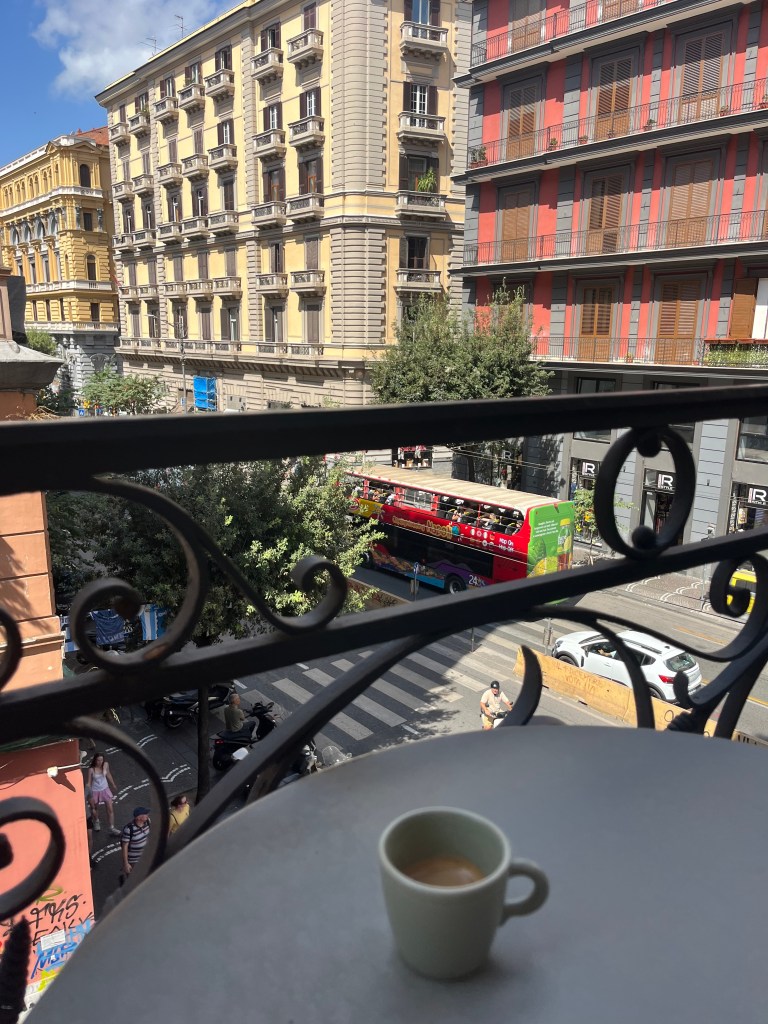
The constant buzz and rush of traffic and honking horns is the soundtrack to Napoli, and while it means that wearing earplugs at night is vital for a decent night’s sleep, it also mingles with laughter, jovial sing-song by workers, the ding of a bell to signify a pizza is ready, shouts of “attenzione” or “Forza Napoli!” adding to a general sense of hilarity, zest for life and rolling with the unpredictability in the best-humoured way.
Locals told us about how a lot of wider Italy look down their noses at Napoli, probably due to its chaos and earthiness, interpreted as brusque and un-chic by the more orderly and fashionable Italian cities, especially in the north.
This wasn’t the first time I had heard of this as I was in a 3-year relationship with a man from the north of Italy (Reggio Emilia) who had a father from the south (Puglia) who often spoke of the north-south divide and rivalry, which to be honest, was steeped in snobbery towards the grittier south.
Being from Liverpool, it can often be found that the geographical inverse is true.
There are some cultural parallels between Naples and Liverpool: both are port cities which have suffered economic decline; both are passionately dedicated to their football team(s), both can be looked down upon from other parts of their respective countries, and both have a palpable sense of fun, party, warmth and salt-of-the-earth humility that welcomes visitors with open arms.
*
Naples is the capital city of the region of Campania, and is the third-largest city in Italy after Rome and Milan. It has had a tumultuous history of being captured and conquered from being founded by the Greeks, to Roman rule, Byzantine rule, Norman conquest, Aragonese, Sicilian, Spanish, Hungarian, and Austrian Habsburg before being annexed into the unified Kingdom of Italy in 1861.
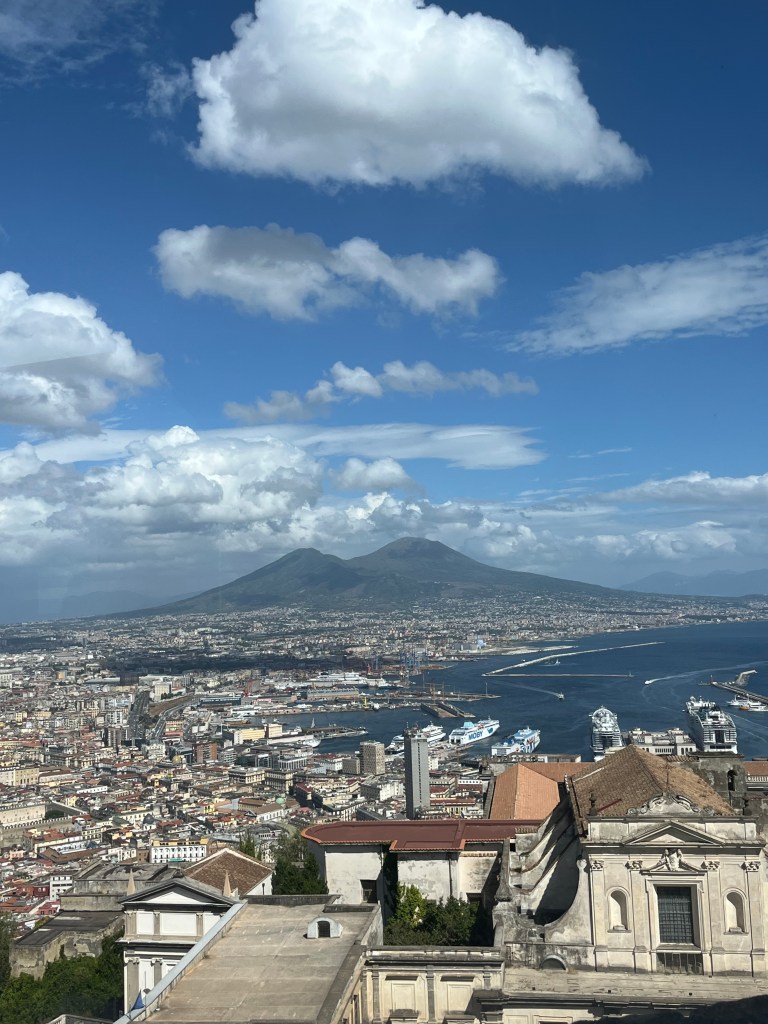
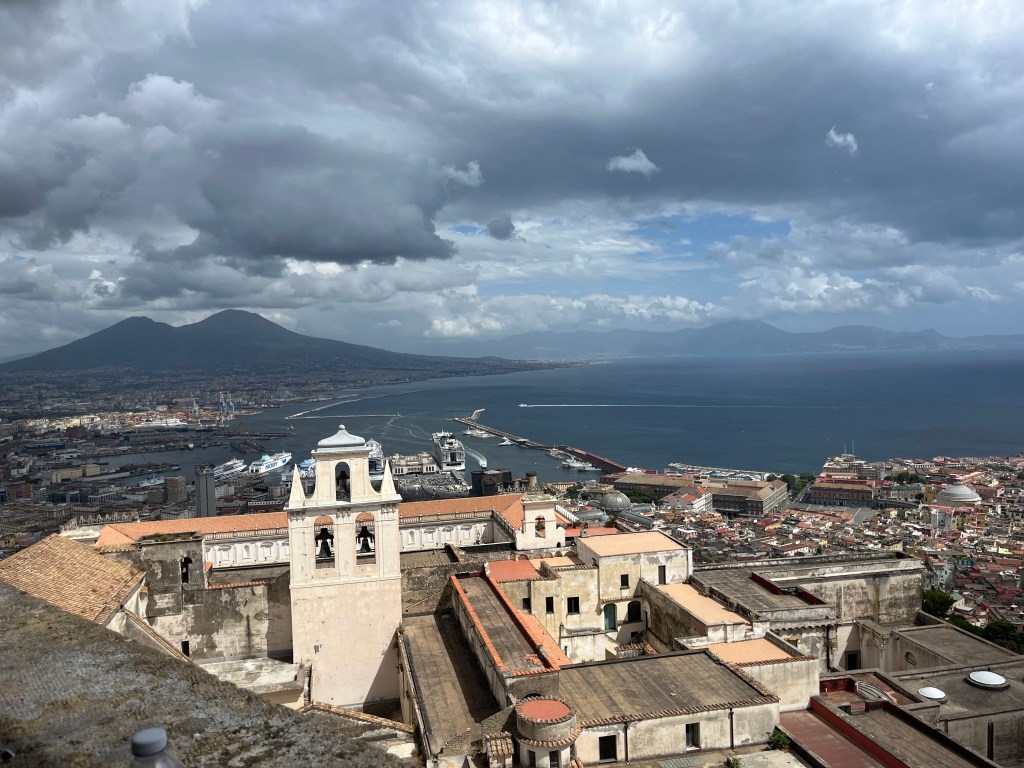
The city is nestled in the Bay of Naples (part of the Tyrrhenian Sea), with Sorrento and the Amalfi Coast nearby, overlooked by the ever-present Mount Vesuvius, with Pompeii at its base.
Stunning islands including Capri, Ischia and Procida are all within an hour’s reach (or less) via Hydrofoil from the Porto di Napoli. The water can be choppy so prepare for this in advance!
When talking about Napoli, it is of course imperative to discuss pizza.
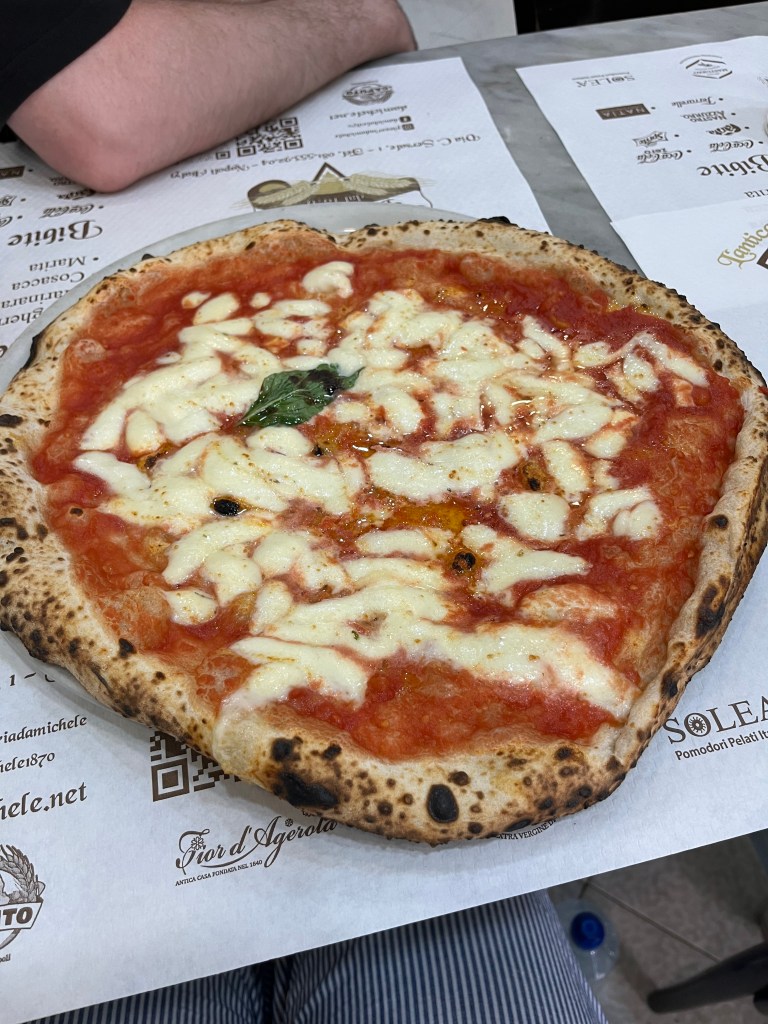
Many types of food are important and native to Napoli and the wider Campania region but let’s begin with the world-famous Pizza Napolitana.
Pizza began as cibo povero (food for the poor) in Napoli due to its basic and locally cultivated ingredients such as ’00’ flour, San Marzano tomatoes, mozzarella and basil.
It is said that the Margherita was invented in Napoli in 1889 as a gesture for the visiting Queen Margherita of Savoy, which made use of the colours of the Italian tricolore flag: basil for the green, mozzarella for the white, and tomato for the red. It was then named the Margherita after the Queen and history was made.
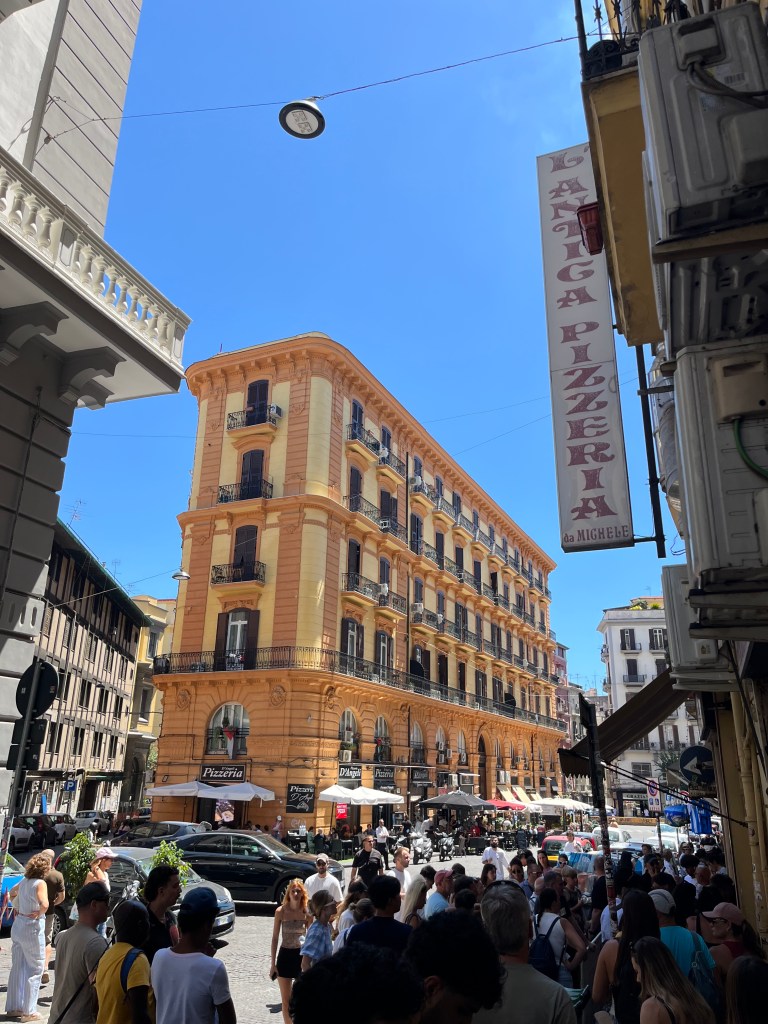
L’Antica Pizzeria da Michele (Via Cesare Sersale) claims to be the home of the Margherita pizza and it reigns supreme to this day amongst locals and tourists alike.
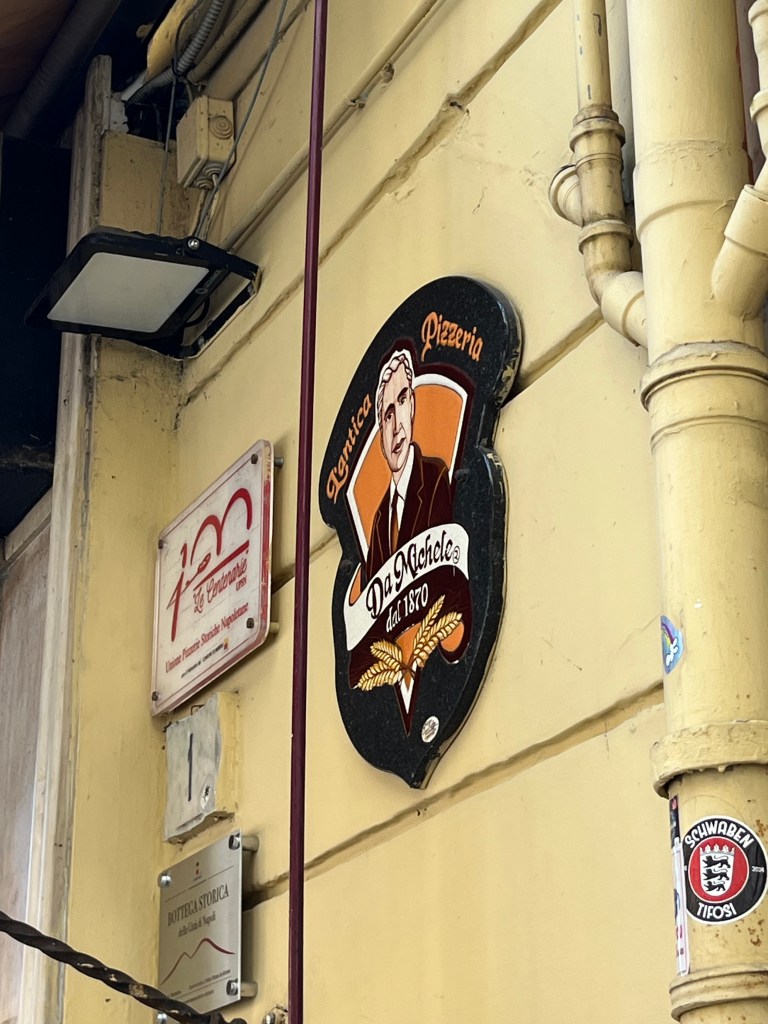
We arrived just before prime lunch time but still had to queue for around 20 minutes for a table inside rather than taking it away in a box. They operate two systems for staying in and takeaway with a token and number system as if you’re waiting for your turn at the pharmacy. An assertive staff members mans (or womans) the door, taking no sh*t.
Once inside, you choose from only three pizzas on offer: margherita, marinara, and a half-and-half. Your pizza is then prepared and baked in the wood-firing oven by the hard-working pizzaioli right in front of you. Their job is hot, tough and laborious, but they are passionate and it’s in their blood, singing and joking with one another as they work.
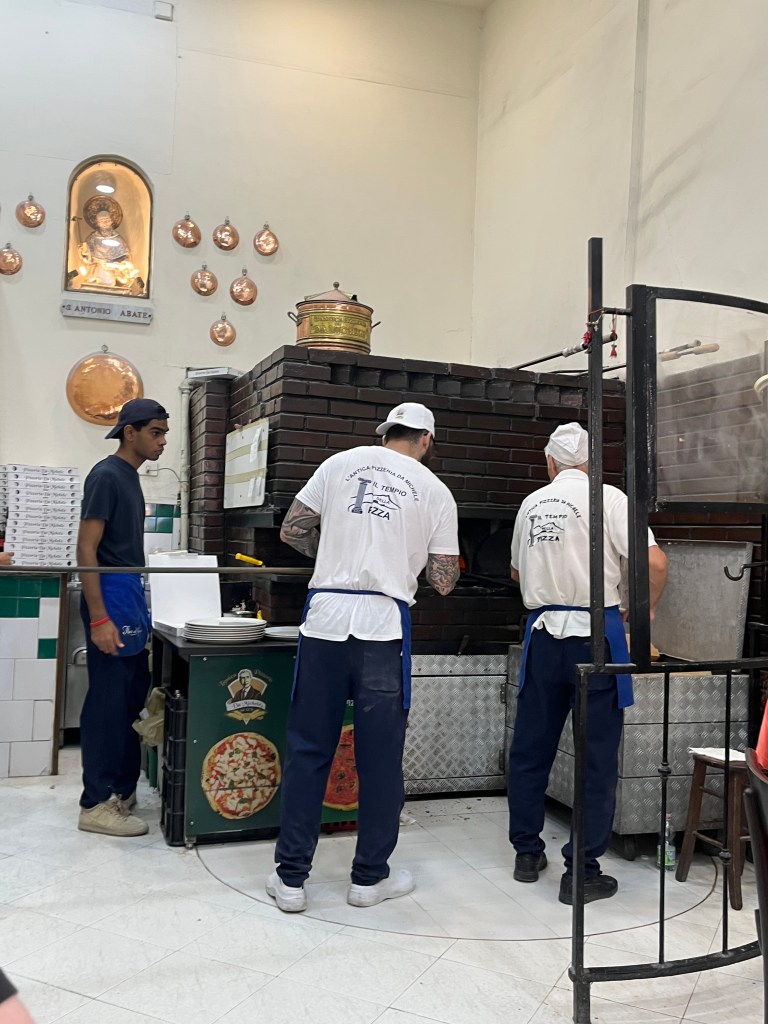
This delight of the lightest dough with simple yet incredibly fresh ingredients and toppings costs an endearing 6 euros. How? A greasy imitation after a night out in Britain will cost you a lot more than that, and your health besides.
L’Antica Pizzeria da Michele is indeed a tourist hot-spot but it is not a gimmick; every Neapolitan person we spoke to and asked where their favourite pizza place was said exactly the same without hesitation: “Michele”. It is imperative that you go but choose your timing wisely to avoid a hot and crowded wait in the street!
Mozzarella prevails across the cuisine of Campania and I can’t get enough of it this year for some reason. I usually prefer harder cheeses such as Parmiggiano Reggiano or Gruyère, but the freshness of Mozzarella is truly a thing of beauty. Rocket (rucola) is always far better and peppery in Italy, and lemons abound from neighbouring Sorrento which are found in so many desserts and liquors/digestivi.
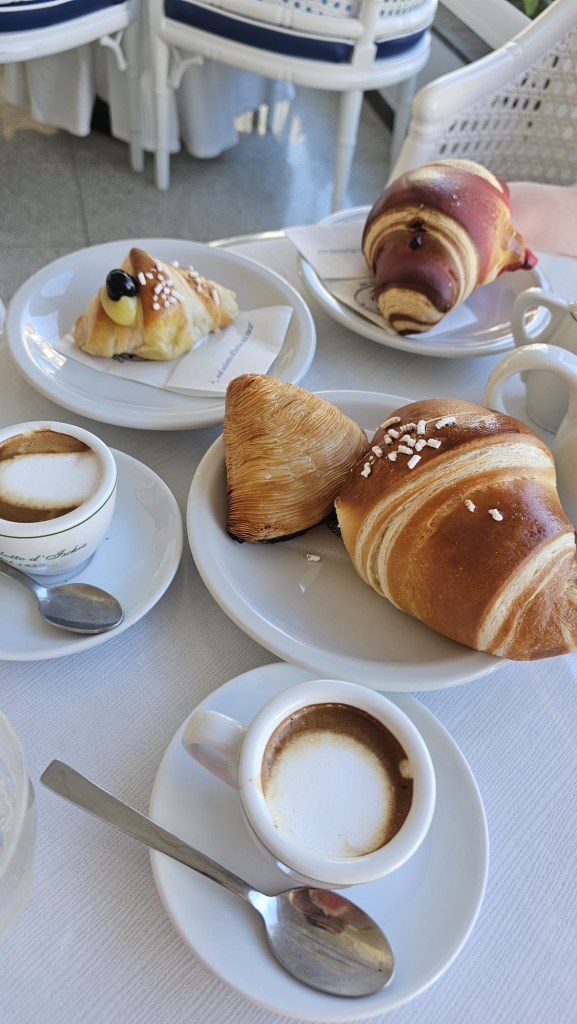
The classic pastry in Napoli is the sfogliatella, a shell-shaped pastry of the finest multiple layers, a wonder of artisan bakery. I don’t possess the family sweet-tooth but even I had to admire the intricacy of the sfogliatella (which literally means ‘little leaf’ or ‘little layers’ in Italian).
Quartieri Spagnoli
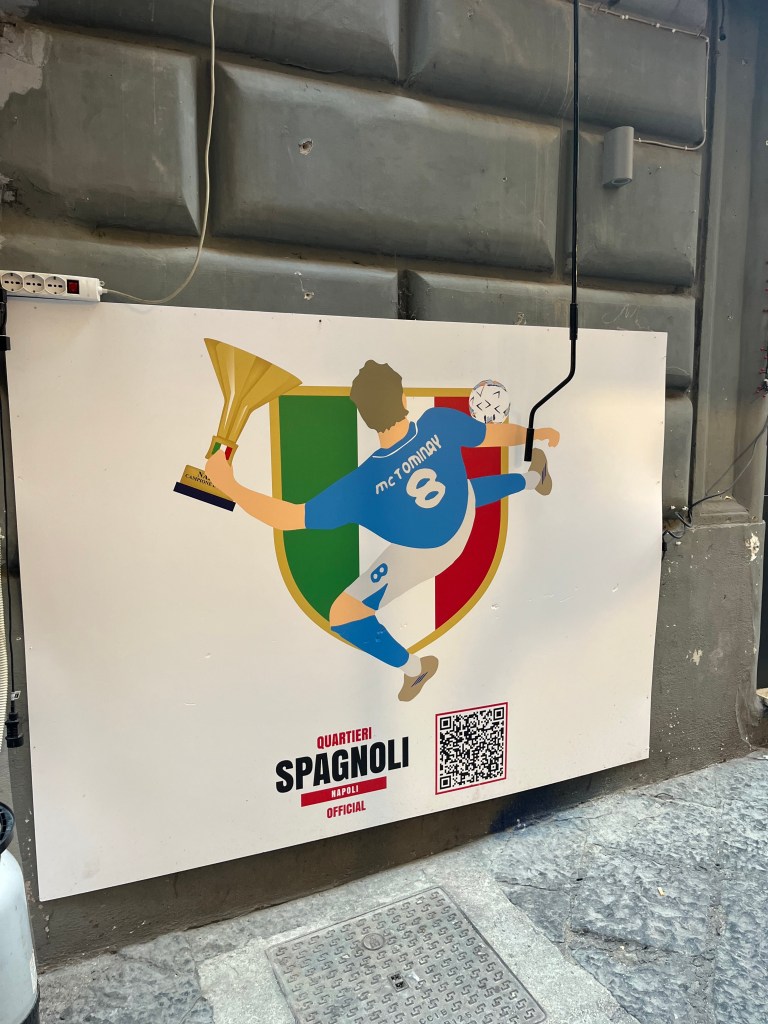
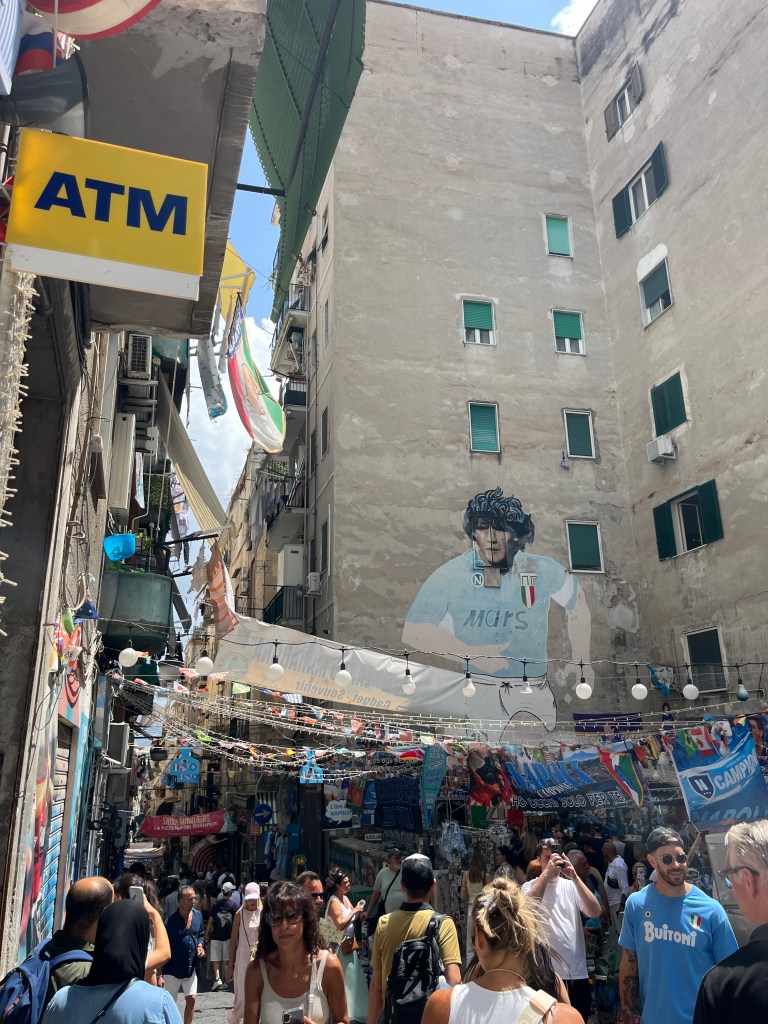
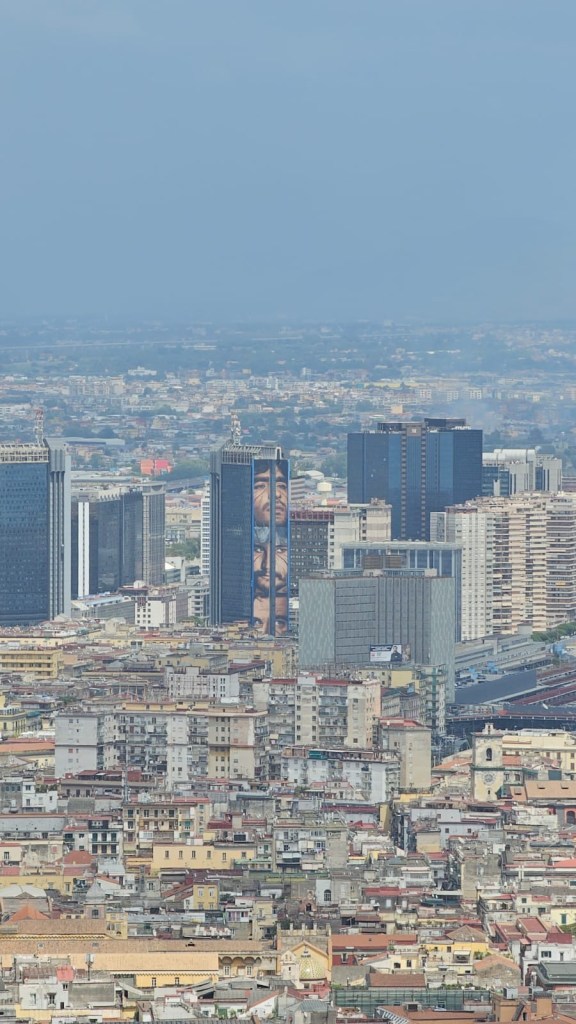
At the heart of the centro storico is the famous Quartieri Spagnoli, so named after Naples’ old connection to Spain, and it also serves as a living, dynamic tribute to the late Argentinian footballing legend Diego Maradona, who is akin to a saint to the people of Napoli.
Narrow, cobbled alleys on a steep incline are densely populated with stalls, markets, shops, clothes rails, vendors, and of course, the omnipresent Vespas.
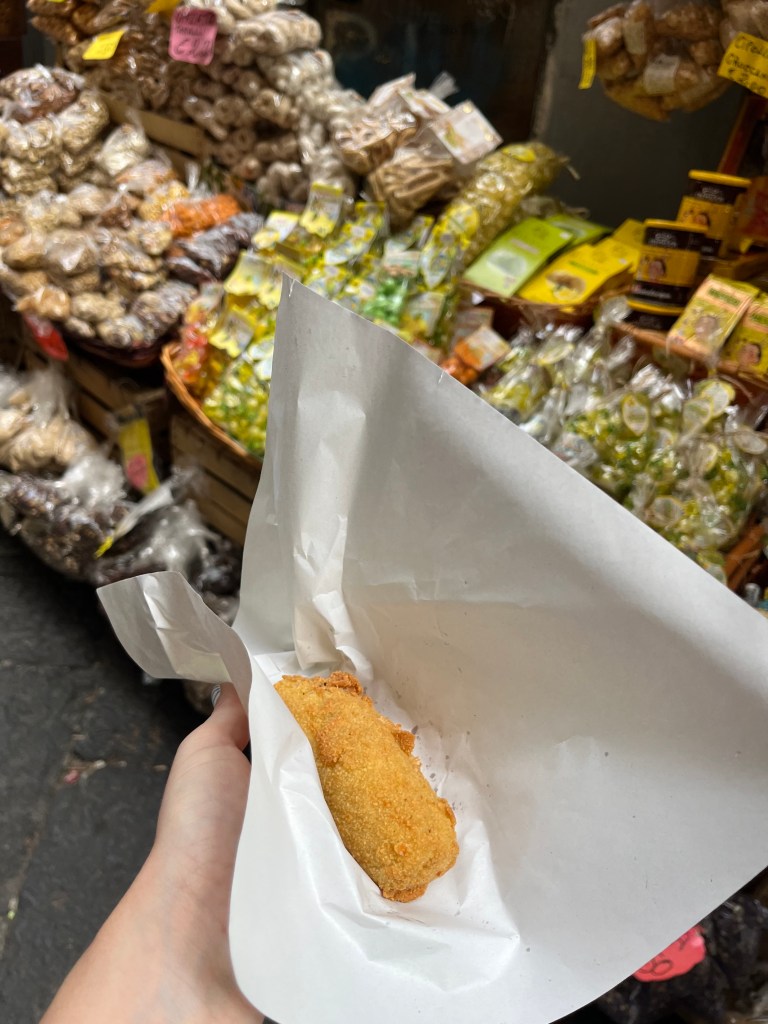
Street food is a bargain in Naples and you could seriously visit this city on a shoestring budget. As you traverse the quarter, you can pause to pick up a crocchè, for example, which is a deep-fried potato croquette, for just one solitary euro.
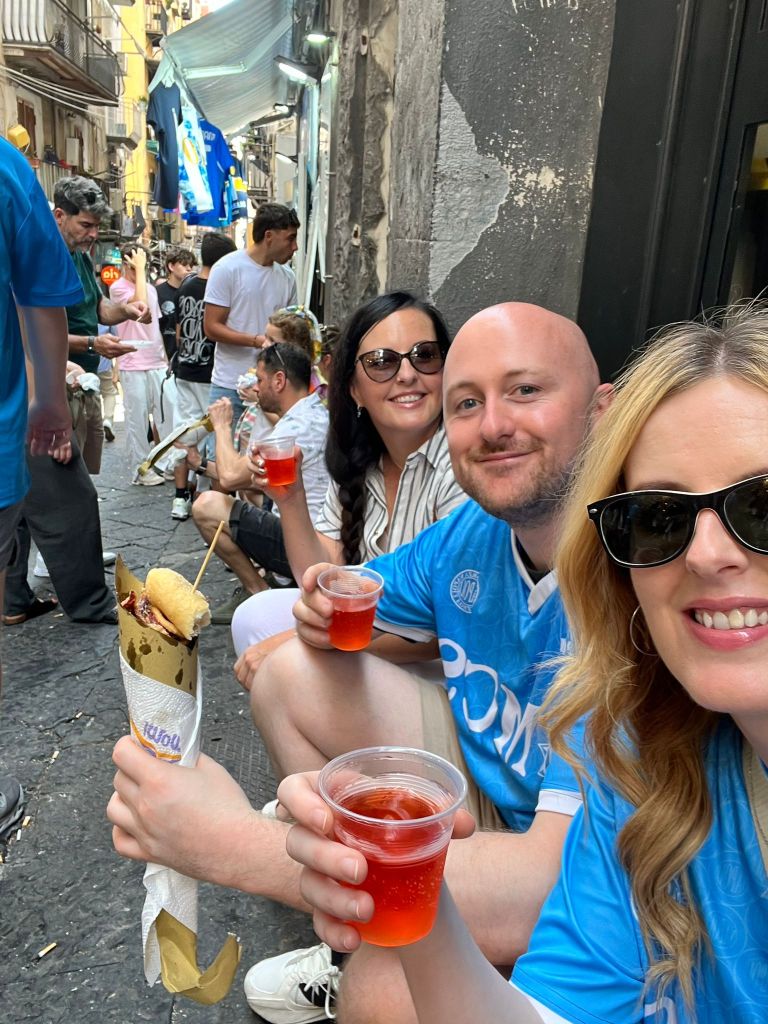
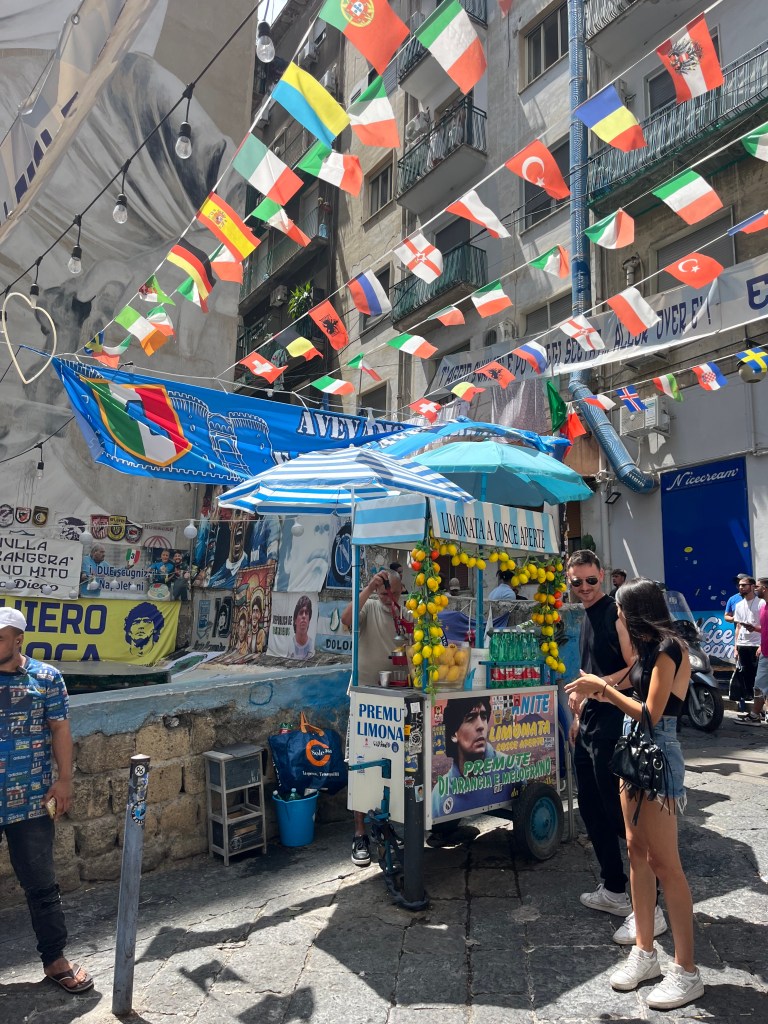
You can never go thirsty around these parts with soft drinks on carts, spritz in plastic cups for 1 euro (don’t be deceived by their small size, the ratio is strong!), espresso bars on every corner and most curiously, stalls vending fresh lemon juice mixed with bicarbonate of soda, called ‘Limonata da cosce aperte’ – lemonade with thighs apart. Allow me to explain…
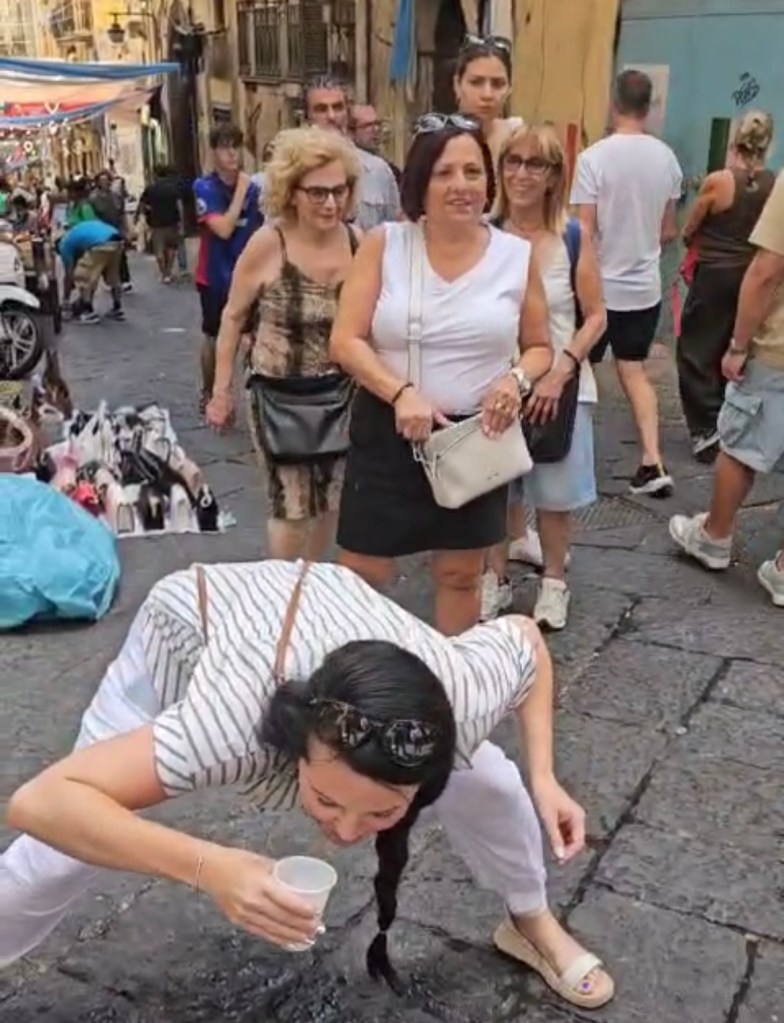
Freshly squeezed lemon juice is handed to you in a plastic cup then the vendor tips in a teaspoon of bicarbonate of soda and the fizzing-over reaction is instant, so the only way to drink it without it spilling over your clothes is to bend forwards with your legs apart so any spillage hits the floor.
A vendor asked me if I wanted one and I pointed at my white linen trousers and said “bianchi” (white) then thought, you know what, I’ve done yoga for years, I can do it.
My WordPress subscription doesn’t allow me to upload videos so here is a still of how it is:
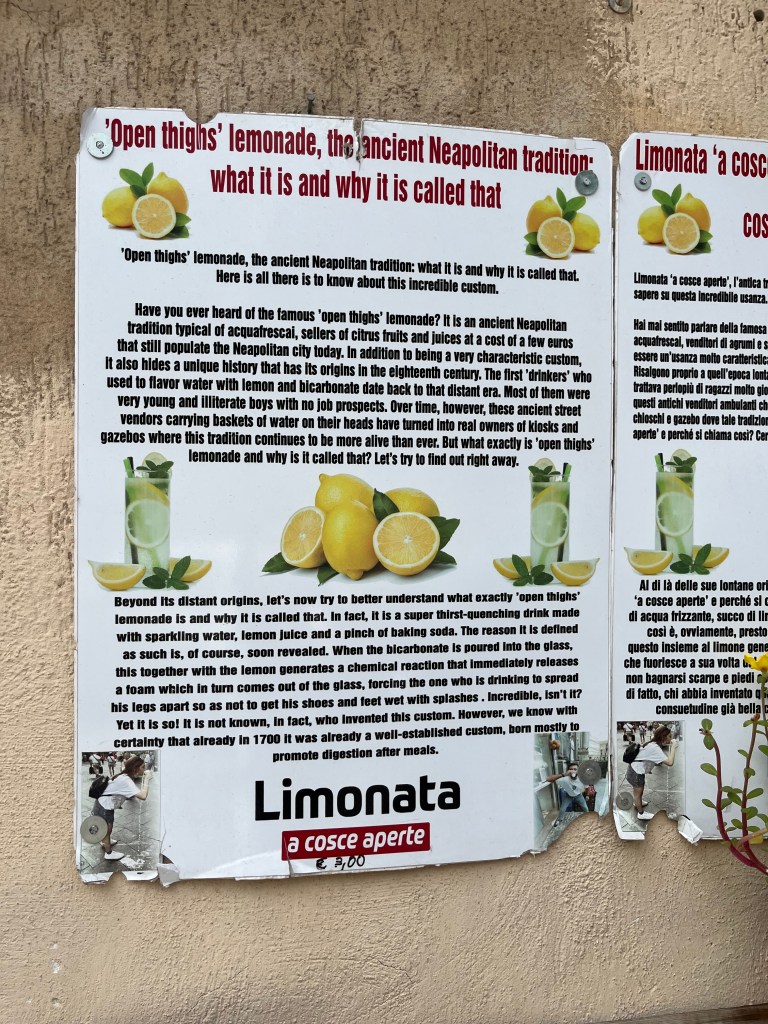
Why do they add the bicarb? It’s for health! This sign explains:
Back to football.
The Neapolitan people are passionate about their team, and Maradona is so revered due to the success and pride he brought to the people. Napoli football shirts are available from numerous shops in the Quartieri Spagnoli, and flags, bunting and other regalia hang from balconies and windows alongside the laundry of residents, fluttering in the breeze reminiscent of a Moroccan medina.
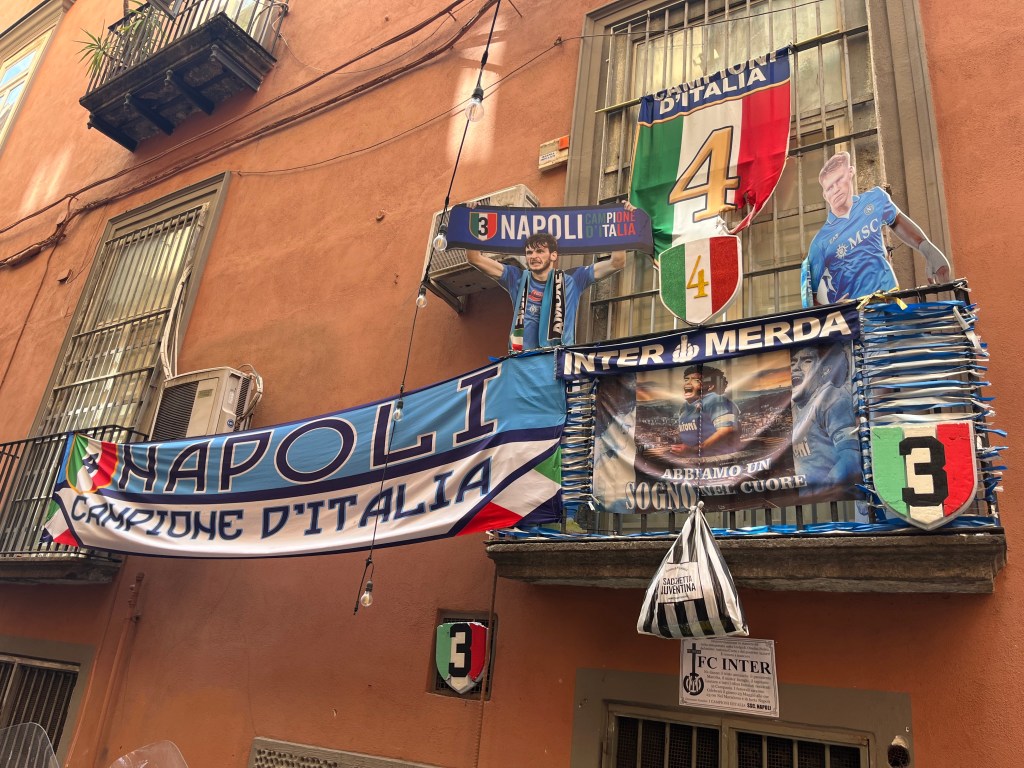
The most recognisable part of the quarter is the Maradona tribute mural:
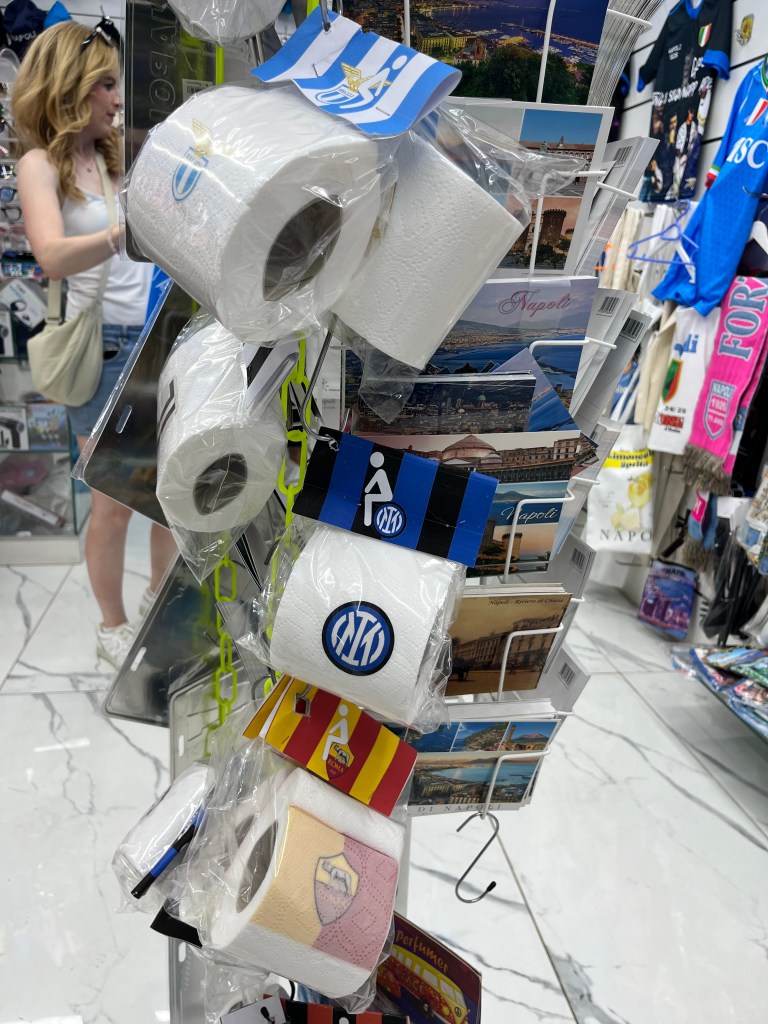
You will also see plenty of cheeky digs at rival football teams:
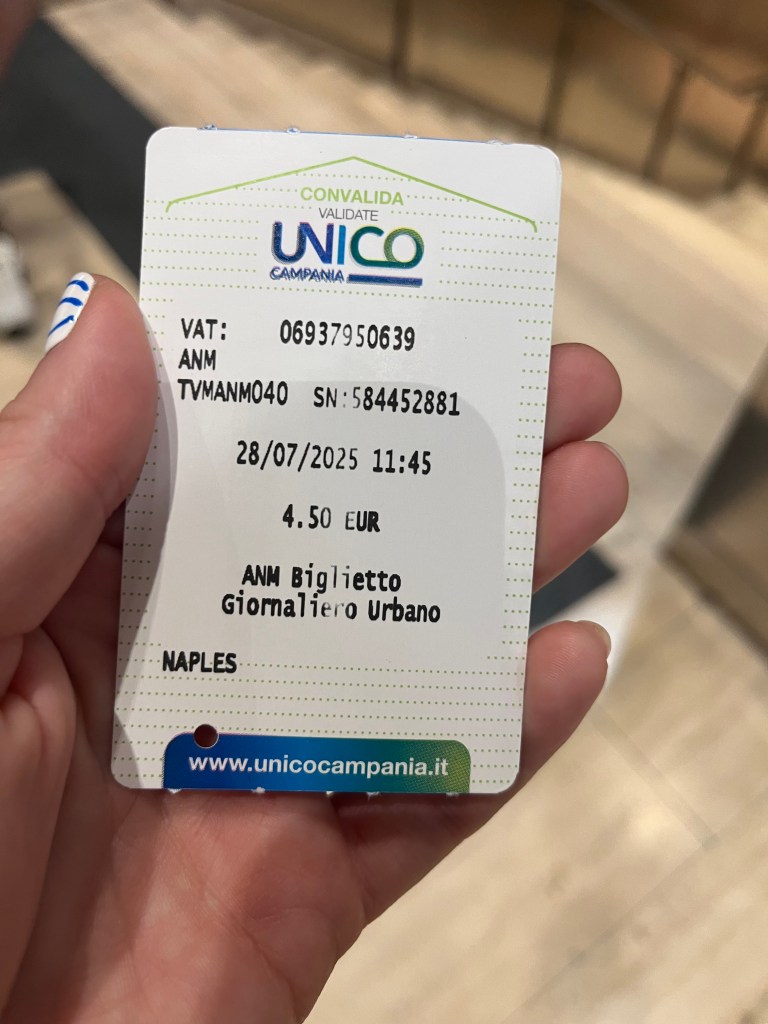
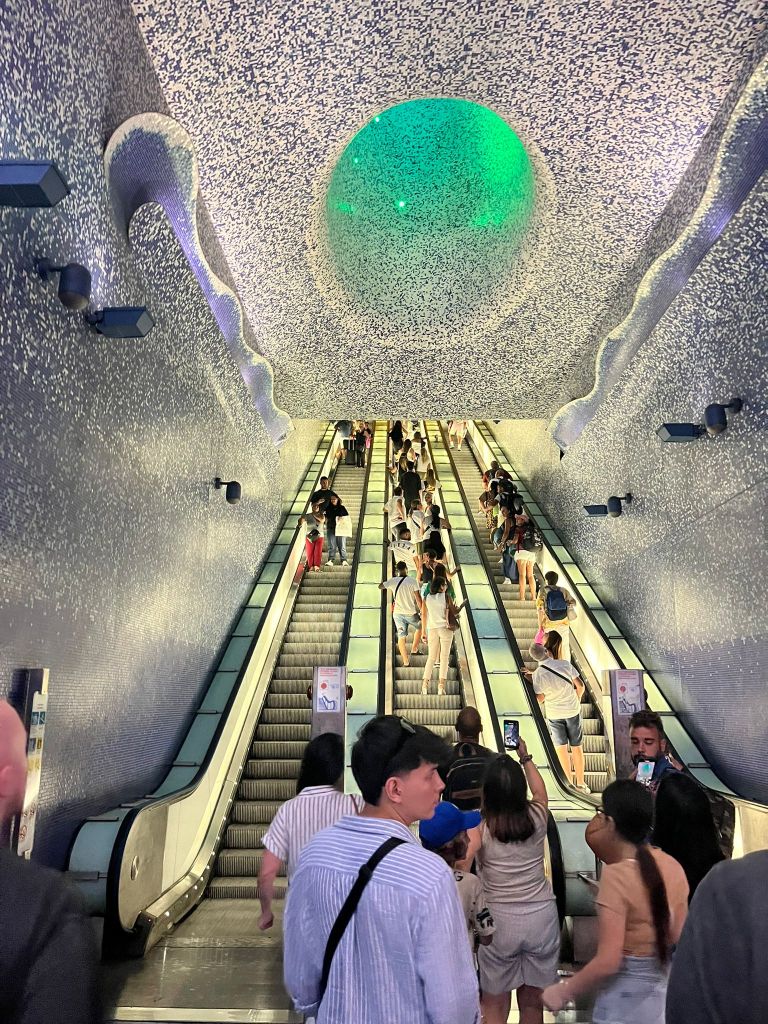
If you want to travel beyond the Centro Storico, a day ticket for the Napoli underground costs 4.50 euros. The Toledo metro station is stunning with blue tiles and an opening up to the light giving the illusion you are under the sea, looking up to the surface:
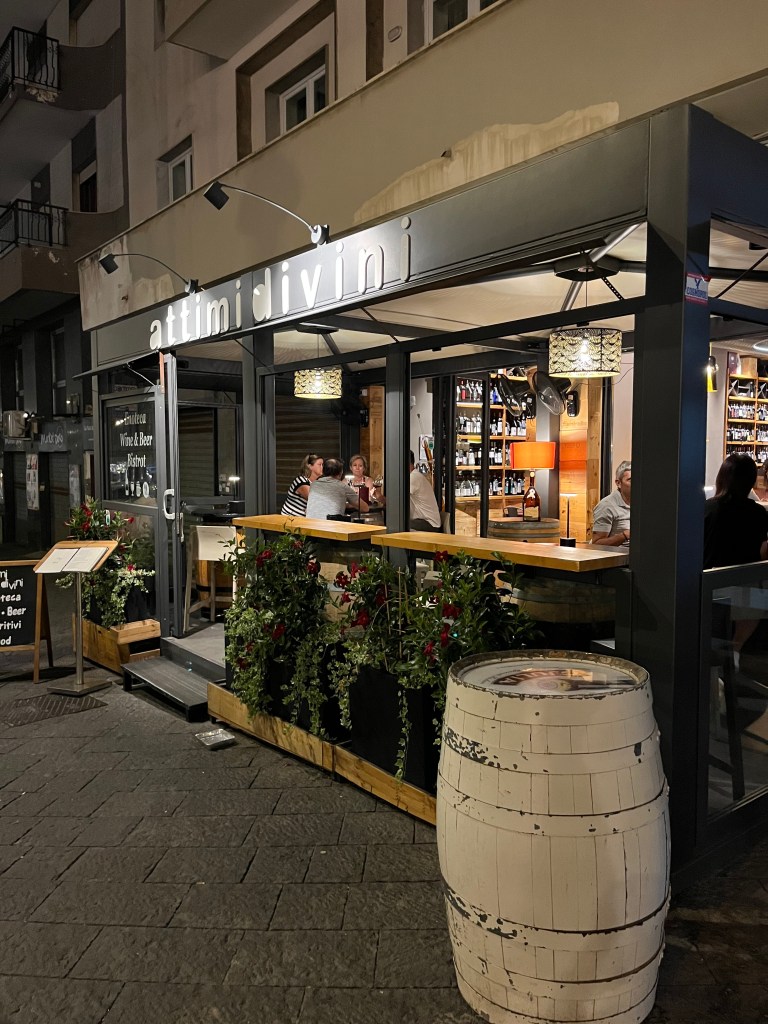
On our first evening, we got a taxi and asked to be dropped off at a restaurant called Attimi DiVini (a play on words of moments of wines/ moments divine) but the jolly driver made an executive decision to drop us off at the lungo mare (promenade) so we could enjoy the walk at golden hour, a 16-minute walk from the wine bar (but we were glad of it!)
We highly recommend Attimi DiVini, a dimly-lit, cosy wine bar and restaurant overlooking the promenade and bay. The shelves are stocked with a library of Italian wines, catalogued by region, and the (very handsome) server knew exactly which one to select when we asked for a crisp, local white for seafood.
We ordered some plates to share which included mortadella con crema di pistachio on bruschetta, gamberoni and raw red tuna and raw prawn sashimi. A few years ago, I would never have entertained crustaceans but I find your palette changes as you get older.
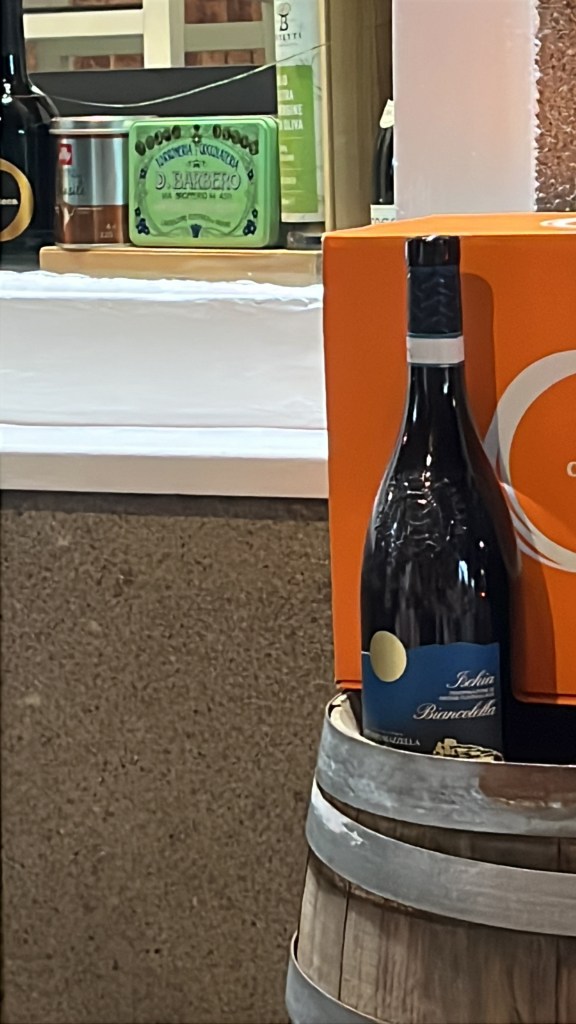
Handsome server brought us a bottle of Biancolella, a white grape cultivated on the island of Ischia from a vineyard called Casa d’Ambra. It was the perfect accompaniment to the seafood we had ordered, with perhaps the cleanest finish of a white wine I have ever tasted. It tasted like fresh running water from a stream in the Scottish Highlands, or some Italian mountain range, but without being anywhere near bland or one-dimensional.
On our second day, we had intentions of going to a pizzeria that Luke had seen online but the plan altered slightly.
Next door to our apartment is the well-respected 103-year-old wine bar Salumeria Ruocco, owned and ran by the wonderful Alessandro, a business that has been in his family for all this time. We asked him when he started working there and his answer was “always”.
He chose an Aglianico red for Luke and I and a Verdeca white wine from Puglia for Sammy and a selection of three cheeses, including one which was a soft cheese made in Sicily, wrapped in fig leaf which infuses the flavour. Sometimes, you just can’t believe the things you get to taste on your travels and Italy is a paradise for this (but that goes without saying!). I’ve written about some memorable wines of my life and travels which you can read here; a food one also needs to be written!
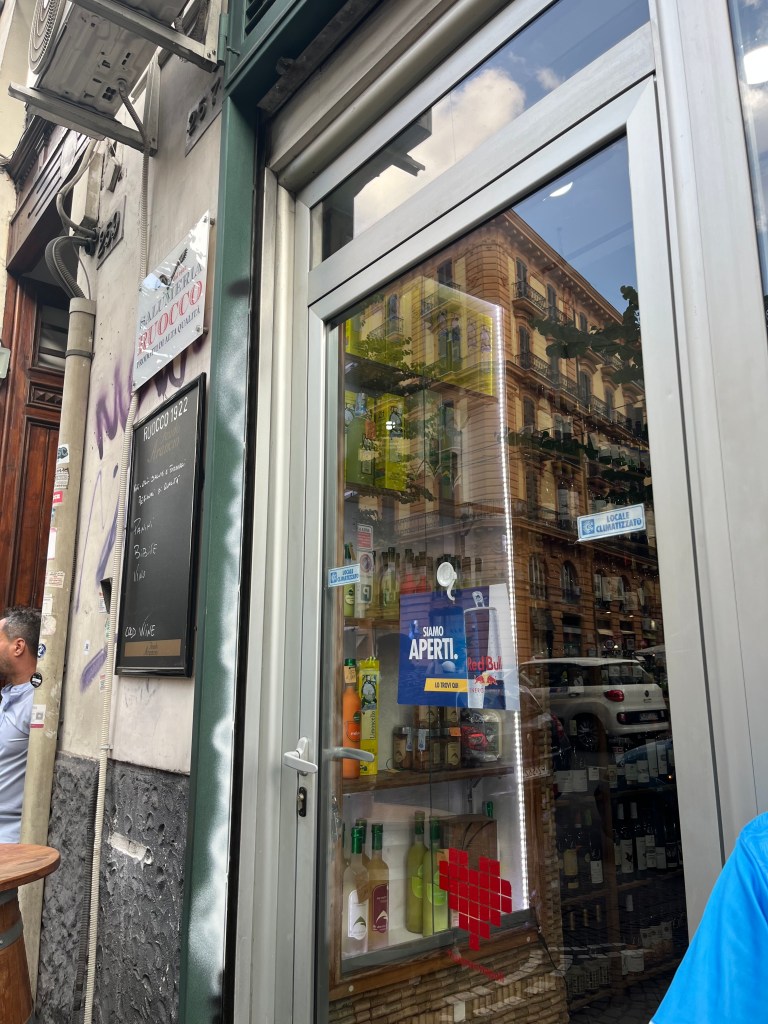
Alessandro is so warm and inviting and is a bona fide expert in his field.
We ended up spending the whole afternoon and evening at the Salumeria, wine and conversation flowing, where we also met Angelo, another Napolitan local, and a sailor from Algeria who always stops off for a wine at Alessandro’s whenever he docks in at Naples.
So what did we do for food in the end?
Angelo swept Luke (who is a chef) off to his local pizzeria and took him backstage to meet his pizzaioli friends and to help make our own pizzas. Luke loved this, and we were delighted when he sent photos to our Whatsapp group showing us where he was!
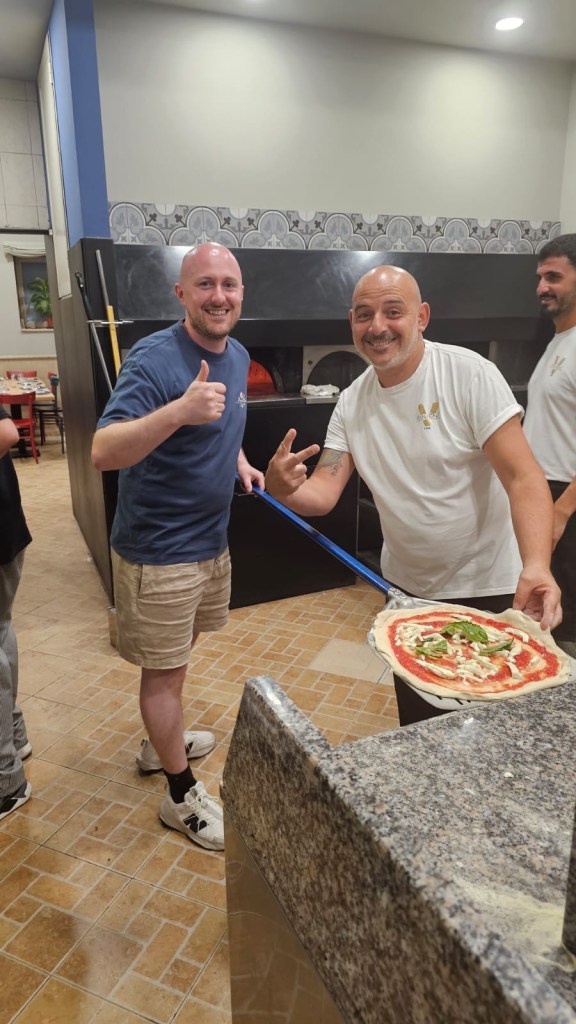
If I lived in Naples, Alessandro’s bar would be my local. What more could you want? Wine, cheese, good vibes, great hospitality and fabulous company. Be sure to visit there when in Napoli, it will stay with you!!
Angelo took us to where the locals drink in Piazza Bellini.
We went to a bright orange Aperol bar where local people sat outside on metal chairs, smoking and sipping their spritzes.
We were amused by the fact it all seemed like a professional operation (with a separate queue for ordering and paying for your drink on a computer screen and collecting a token, to the queue for getting your drink from the bartender) when after a few songs, the Spotify adverts kicked in over the large speakers (even funnier when it had a dance floor and not just a chilled bar where it could be overlooked).
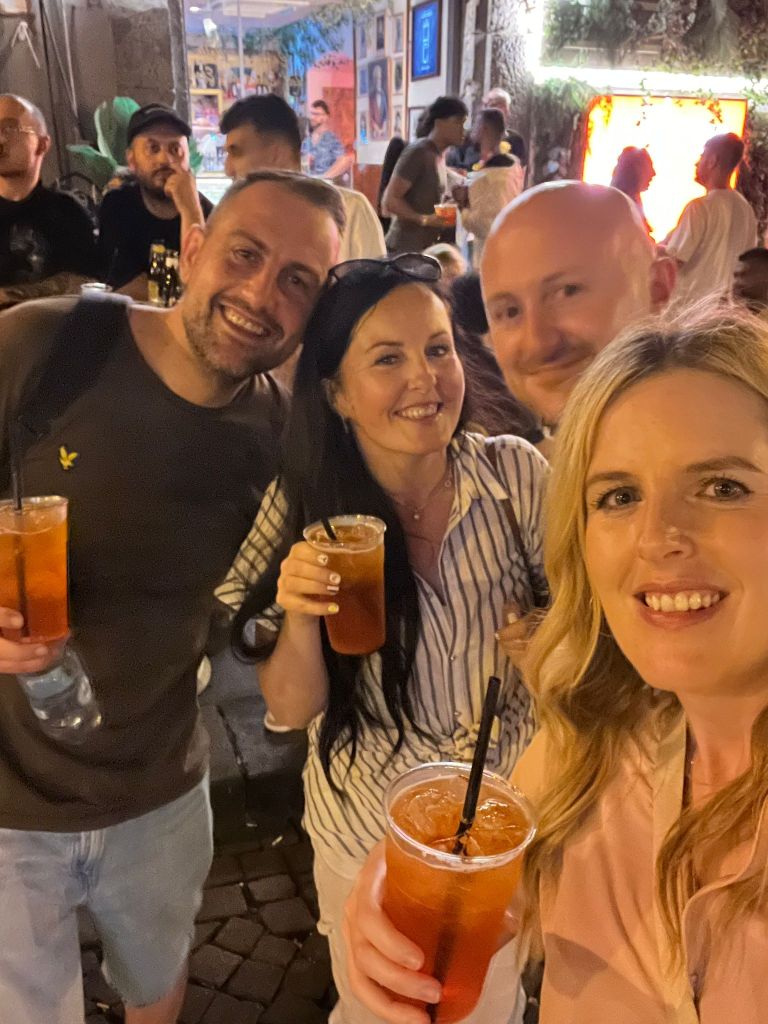
People often talk about Napoli in dangerous terms, warning of pick-pockets and attack. I am sure this does happen sometimes, as in most large cities. We kept our wits about us and regular checks of bag position etc, but I have to say that without naivety, it did feel generally safe and people were in such good spirits. In this way, it reminds me a bit of how people can view Liverpool with archaic jokes about thieves etc but contradictorily known to be one of the friendliest and safest cities in the UK too.
Well, whatever the reputation, thankfully nothing bad occurred and we were safe and in good company. Every single person we met in Naples was a delight with notably more character than other places we have been, including Italy.
*
Food and drink aside, another delight to experience is a panoramic view of Mount Vesuvius, surreal to see when you learned about it way back in primary school and it held almost mythical status in your imagination.
We walked up and out of the Quartieri Spagnoli and took the steep climb up towards the viewpoint called the Belvedere San Martino. A few pauses for a sip of water were necessary, let me tell you.
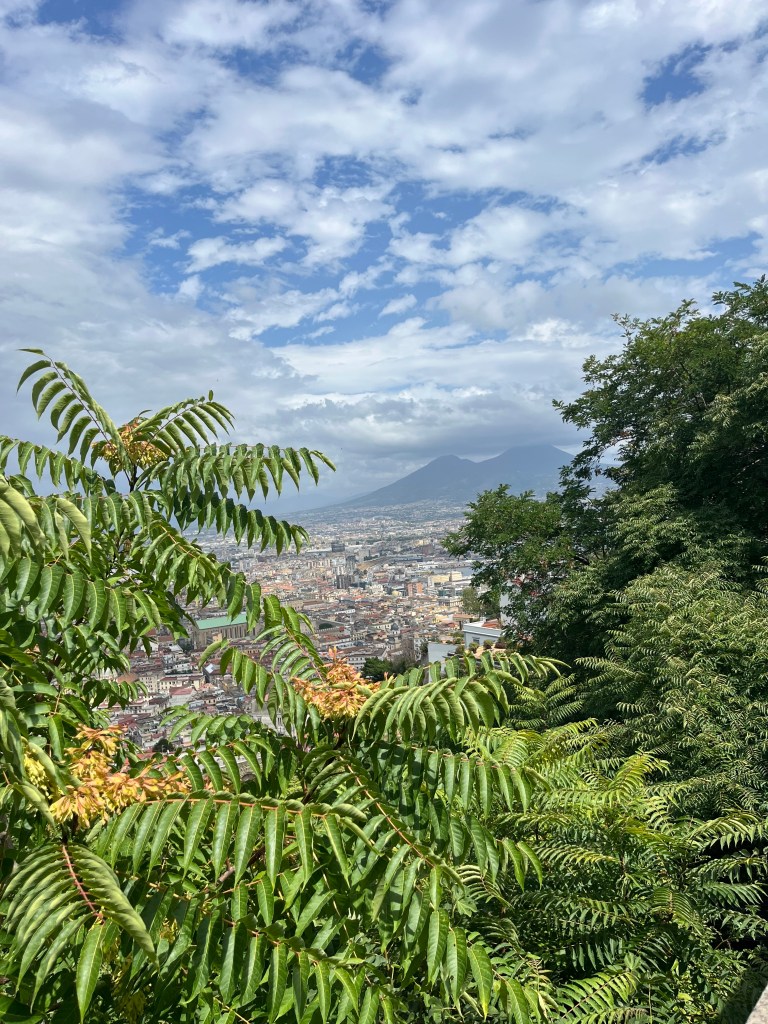
We wondered if the ever-presence of the looming Vesuvio imbues the people with their passion and effervescence of character. That was the main thing we noticed about the Neapolitan people- everyone we met was brimming with character and hilarity, rolling with the chaos of their city with a light-hearted hilarity.
If you walk on a few more minutes from the Belvedere San Martino, you will find the Castel Sant’Elmo. Pay just 5 euros and you gain entry into the old fort and can access even more stunning views of the volcano.
We thought we would be tired of the bustle of Naples after those two days and be eager to leave for the island, but we loved it so much we definitely had at least a couple more days in us to explore more of this colourful and soulful city steeped in so much history. Our Hydrofoil to Ischia was booked for early in the morning on day 3 so we had to leave with mixed feelings: excitement for what lay ahead but wistfulness at wanting to see more of Napoli.
Sadly, we didn’t get to Pompeii on this trip, nor Capri, Sorrento or the Amalfi Coast.
But the silver lining is that it provides even more reason to return!
Blog entry on Ischia coming very soon.
Arrivaderci, Napoli!
 Laur On Tour
Pingback: Island Life: Spending Four Divine Days on Ischia, Campania, Italy – Laur On Tour
I love the fact that you can see Vesuvius from just about everywhere!
LikeLike
Pingback: Solo Travel: One Night, Two Full Days in Geneva, Switzerland – Laur On Tour