
February half term was imminent and it had been a very busy time so I found myself playing Ryanair Roulette again, taking a spin on the search bar to see which flight dates, times and prices fitted in with my time off.
I have been to several destinations more than once so am not adverse to visiting the same place or country again but it does feel like a bonus when I get to see a new country so when cheap flights came up for Košice, a city that two of my friends had visited a couple of years ago and enjoyed, I booked then let the research commence.
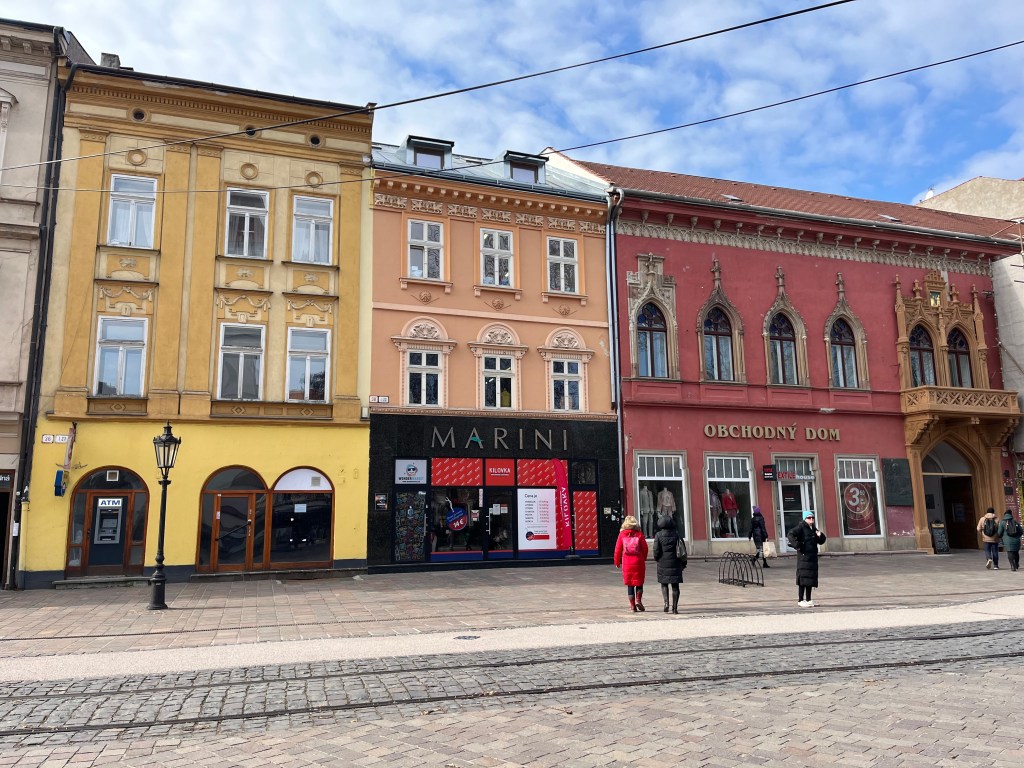
Košice (pronounced ko-shít-sa) is the second largest city in Slovakia, on the eastern side of the country. You can reach the Tokaj region, famous for its golden-sweet wines, that spans a small area of Slovakia and more famously into Hungary, in around three hours (a future trip idea!).
Quick facts:
- Currency- Euro
- Language- Slovak
- Time Zone- GMT+1
- City centre from airport- 20 minutes by bus
I visited Košice in mid-February and it was very cold upon arrival at -2 degrees and stark sunlight. I had read in advance that they have Uber and Bolt so decided to order one to take me into the city as I had also read that the airport bus comes only around once an hour and can be unreliable.
Imagine my surprise when the Uber app said the driver was 0 minutes away and the registration number matched the plate of the parked-up car with no driver that was in front of me in an airport parking bay. I then received a message from the driver saying “I’m here”.
I stood by the car for five minutes waiting after I had responded saying that I was there too and asked where he was.
“Where do you want to go?” came the eventual reply, which I found odd as the booking obviously required me to enter my destination.
As I thought this through, I looked up and saw a man strut over in a cloud of cigarette smoke. The Uber booking had said 8 euros which I did think was very cheap. The driver said he couldn’t do the trip for that price and insisted on 35 euros and that I could send him a bank transfer (which wouldn’t be too easy from a GBP bank account to to Euro account with high conversion fees anyway) so I declined because I thought it might invalidate any insurance if we were in an accident if we subverted the booking.
It made me feel sad that presumably, working as an Uber driver did not make sufficient earnings to somebody in Košice if they had to extort more money than Uber was deciding but I could not take the risk that once I got in his taxi he may suddenly change to 50 euros or more then incur anger if I refused to pay that much.
Instead, I waited at the bus stop with freezing fingers and toes for an indeterminate amount of time until one trundled up. I hadn’t seen a ticket machine near the airport’s exit where you have to purchase bus tickets in advance as they don’t take cash or card on board. I thought, ‘oh no…’ when I saw the people in front of me show their tickets and realised I didn’t have one. Would it be another hour in the biting cold? Fortunately, the friendly driver walked over to the machine with me and waited as I swiped my card over the contactless, hoping it would work ok as it lagged; thirty seconds felt like forever.
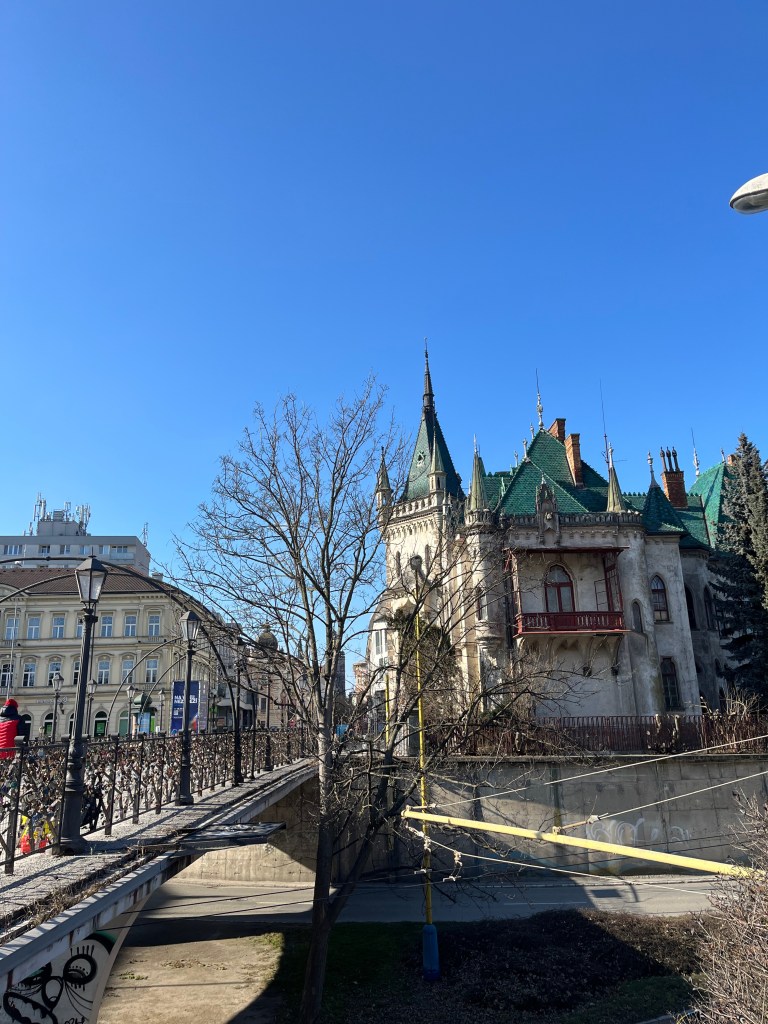
The 20-minute drive into the city centre was pleasant despite the route being quite industrial. After disembarking, you have to cross a park which I imagine is beautiful in the spring and summer, then you cross a bridge. I then caught sight of a building I had seen in my Google searches (pictured above): the Jakab Palace, a Neo-gothic building designed by a Hungarian architect and constructed from leftover stones from the St. Elizabeth’s Cathedral. Such buildings in Eastern Europe call up the fairytales I read in childhood and the fascination never really fades away.

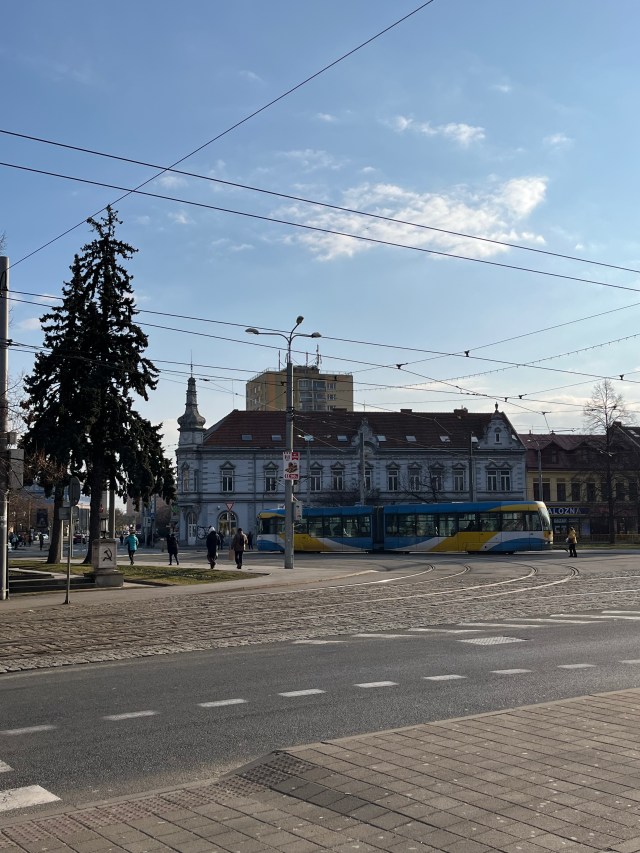
It was slightly warmer in the city centre compared to the airport and everything looked clear and pretty under the sunny, blue sky.
Košice’s old town is petite and walkable and it was just so calm. People stroll along quietly and you aren’t hit by an assault course of loud sounds, dazzling lights and harassing adverts at every turn and it feels like a relief from the overstimulation of everyday life.
I had been up since 3:30am so it was time for a coffee.
There is an excellent wine bar called Barrique but it is as much a coffee shop during the day so I popped in and had a quick macchiato then sat with a peppermint tea to pass more time while I decided where to go that morning before lunch.

I had read that the view from the top of St. Elizabeth’s Cathedral is worth going up to see but I entered while there was a religious service taking place. Instead, I just admired the dramatic Gothic cathedral from ground level, taking in all the ornate details of the largest church in Slovakia. Construction began in all the way back in 1378!
It is named after Saint Elizabeth of Hungary and made me think about the fact my mum is half-Hungarian and is named Elizabeth and maybe that’s why she was given this name as it is so popular there.

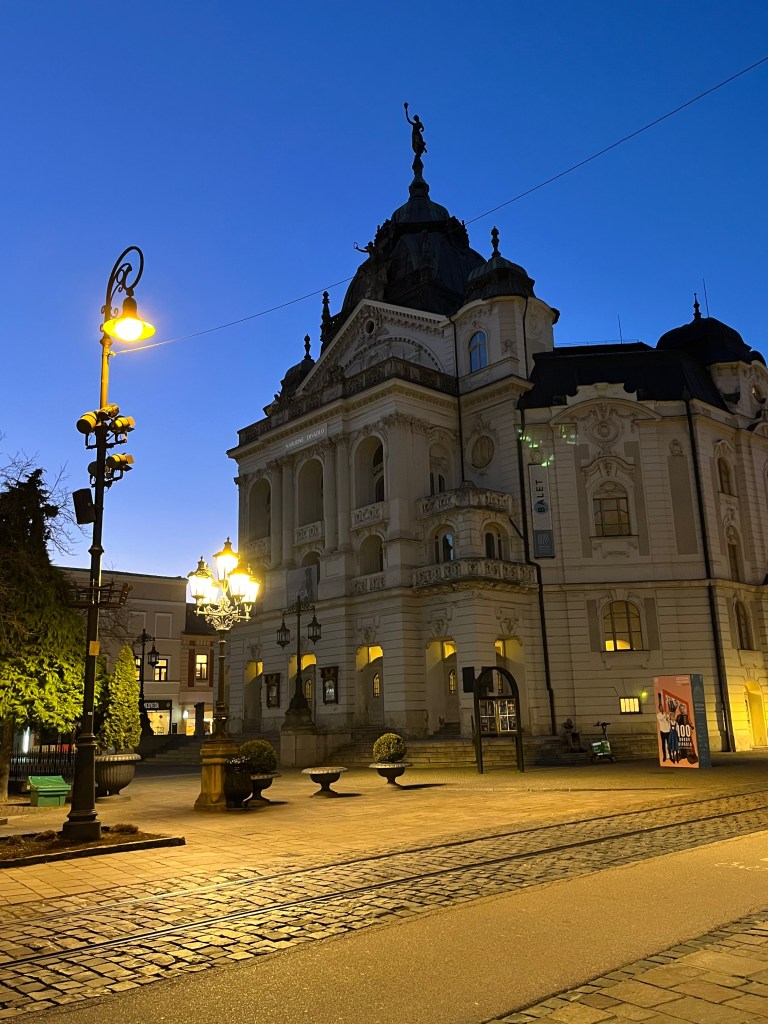
Facing the cathedral is the elegant National Theatre Košice building where you’ll also find the singing fountain (I went there after dark both nights but didn’t see the display, perhaps it’s not on in the winter months).

Even older than the cathedral is the Dominican church at the edge of the old town which was constructed in 1290:

I spent most of the first morning wandering around until it was an acceptable lunchtime and by this point, I had an appetite fitting for the heavy Slovak food. (I read before this trip that Slovak people understandably do not like the erroneous use of ‘Slovakian’ which does not exist; their language and nationality is Slovak).

Restaurant Republika Východu is on Hlavná, the Main Street, just past the cathedral. It is surprisingly difficult to find traditional Slovak food around here but there is an overload of sushi restaurants, noodle bars, Italian restaurants and burger joints. There aren’t a massive number of tourists in Košice so maybe these international cuisines are on offer in the city centre as novelties to local people wanting something different to what is cooked at home.
I ordered Slovak pirohy- very similar to Polish pierogi- which was filled with cheese and was topped with sour cream, bacon and spring onions. I also had to try a local wine so ordered a glass of Dunaj, a red grape grown in Slovakia and the Czech Republic and named for the Slovak word for the Danube river. I had never heard of Slovak wine so had to try it; it was dry and hearty and went very well with the pirohy.
If you’re in Košice and want to try Slovak food- Republika Východu is your best bet with great prices and friendly English-speaking staff.
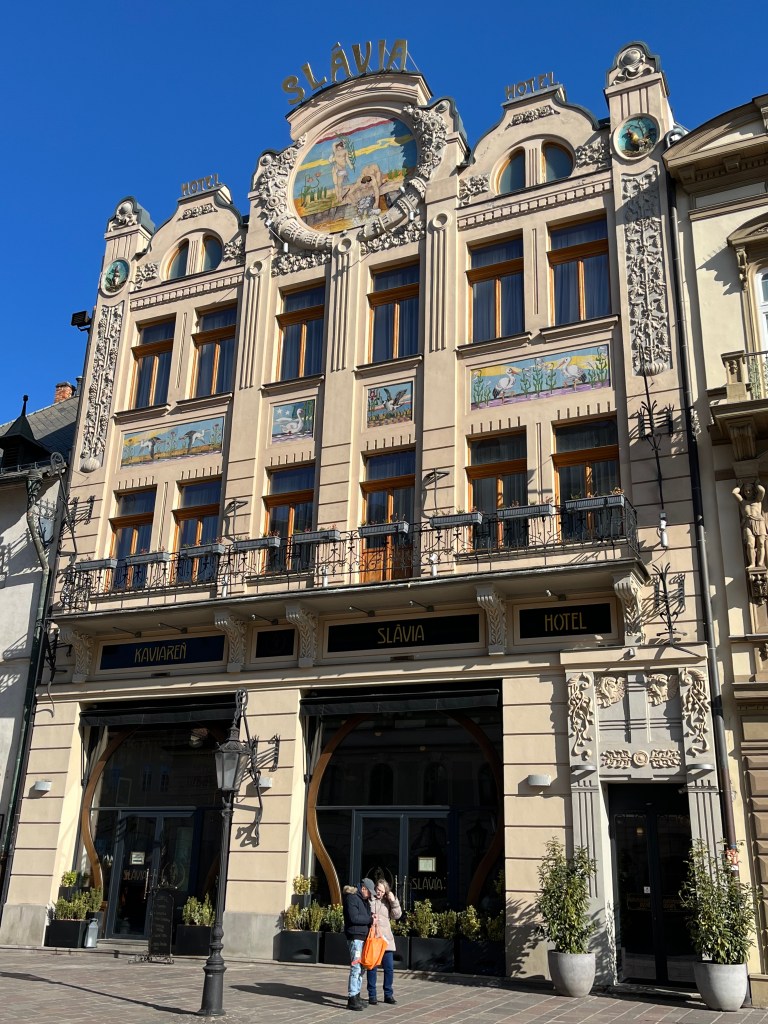
Another restaurant serving traditional food that I saw recommended on Trip Advisor is the restaurant in the Slávia hotel. I almost went in for dinner that night, prepared to pay a bit extra for something special but the menu is a short dish of the day offering which comprised of meats I don’t like but it’s definitely one to consider if you’re there and are after a fancy meal in a rather opulent setting.
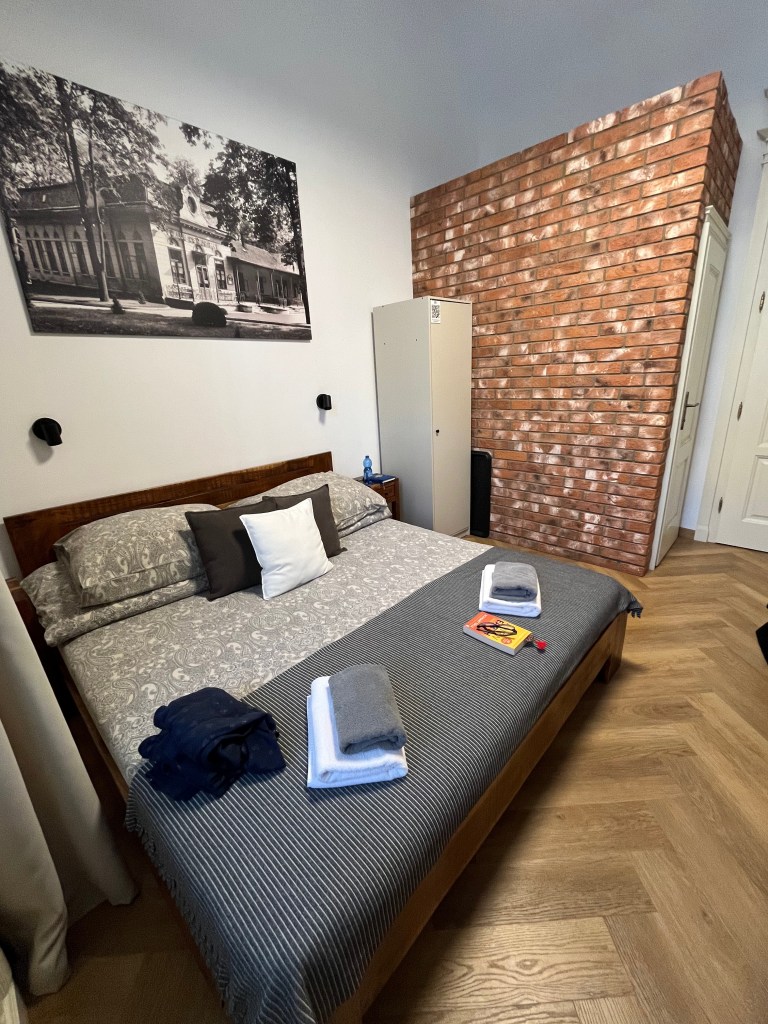
After lunch, it was time to check into my apartment which was at the Apartmany Krmanova, located only a few minutes walk from the high street. The entrance was a little bit confusing but once in, I was really happy with where I would be staying. I had a ground floor apartment with double bed and small kitchen and walk-in shower (a strong, hot shower after flying and walking round in the cold for a few hours is one of life’s blisses) and the woman on reception was very friendly and helpful despite our language barrier.
It was a bargain and I would highly recommend it for your stay! The bed was exquisitely comfortable as well which can be quite rare, even in pricier hotels.
After a shower and nap, I headed back out to find something light to eat for dinner.
The answer to that was Soup Culture, a small takeaway-sized place with only soup on the menu, served to you in an edible bowl. I went for tomato and basil which the guy working there topped with mozzarella and parsley. I asked for a spoon but they don’t do them. It was a lot more filling than it looks and that was sufficient for dinner costing just 5 euros!

Warmed from the inside, I went for an evening walk to see Košice in a different light. The air was so fresh and clear and the streets became slightly busier compared to the chilled daytime but still only by a touch.
The darkening blue sky and ornate street lamps added an ambience I preferred to the daytime, making the buildings look even grander. A soft bell chimed from the cathedral, forming an unobtrusive backdrop to the sound of quiet chatter from smartly-dressed locals passing by either on their way home or popping into a bar or café with friends.

I’ve holidayed alone and moved abroad alone and am quite content spending time alone, wandering around and sightseeing alone and I felt very safe in Košice, but the evening is where I sometimes feel a bit out-of-place without someone to chat to whilst out and about so I always pack a book to sit and read wherever I end up.
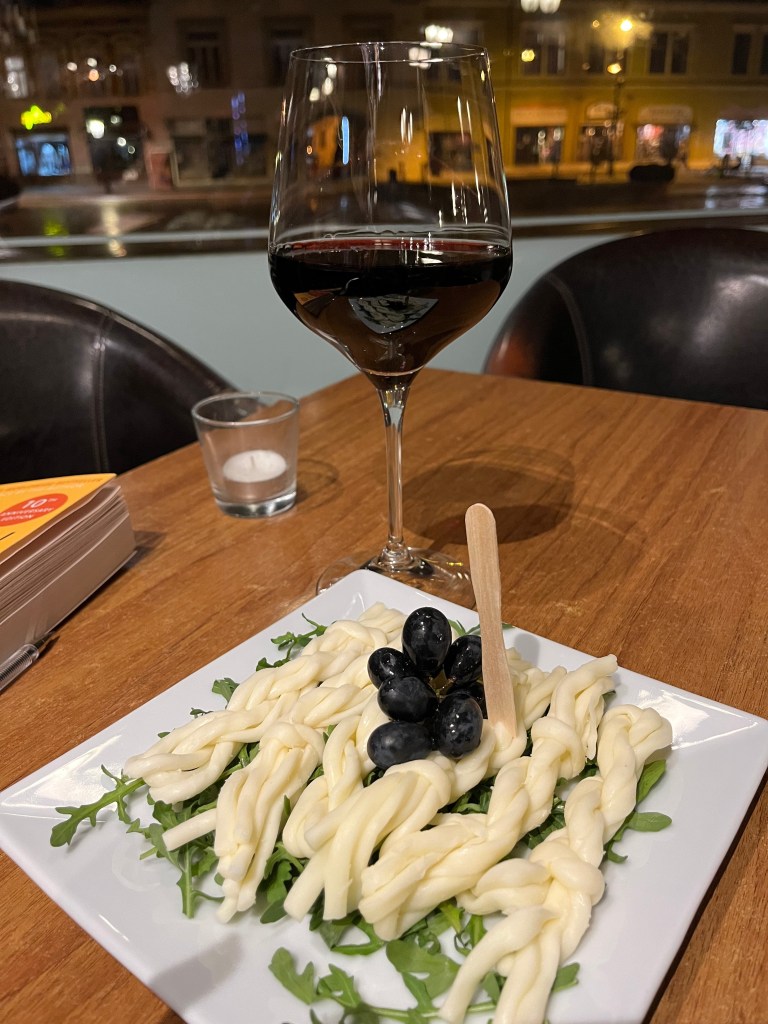
I had read about Slovak cheese so headed back over to Barrique and ordered the classic korbáčik, a braided string cheese made from cow’s milk, and a glass of Slovak Cabernet Sauvignon (this could be the nicest wine I’ve tried so far this year!). Even the little touches like the wooden cheese fork and black sable grapes on a bed of rocket made it feel like a real treat and was enough for the evening after the soup earlier and the heavier lunch. (The book I was reading was A New Earth by Eckhart Tolle btw).
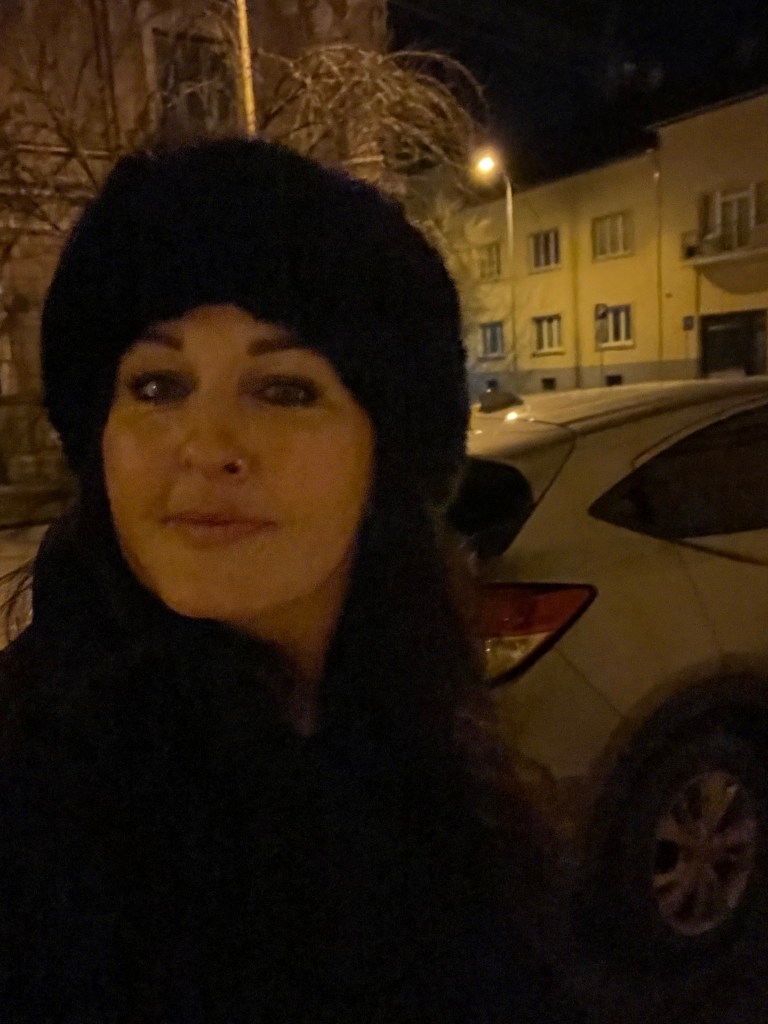
I wanted to get at least one pic of myself on this trip so took this on my walk back to the apartment, freezing but happy in my thermal hat!
After a great sleep, I woke up to another crisp, bright morning and set off into the streets without an agenda. I had considered getting a train into the High Tatras mountains but I read how icy and slippery they would have been at that time of year but am saving the idea for a return in warmer weather.

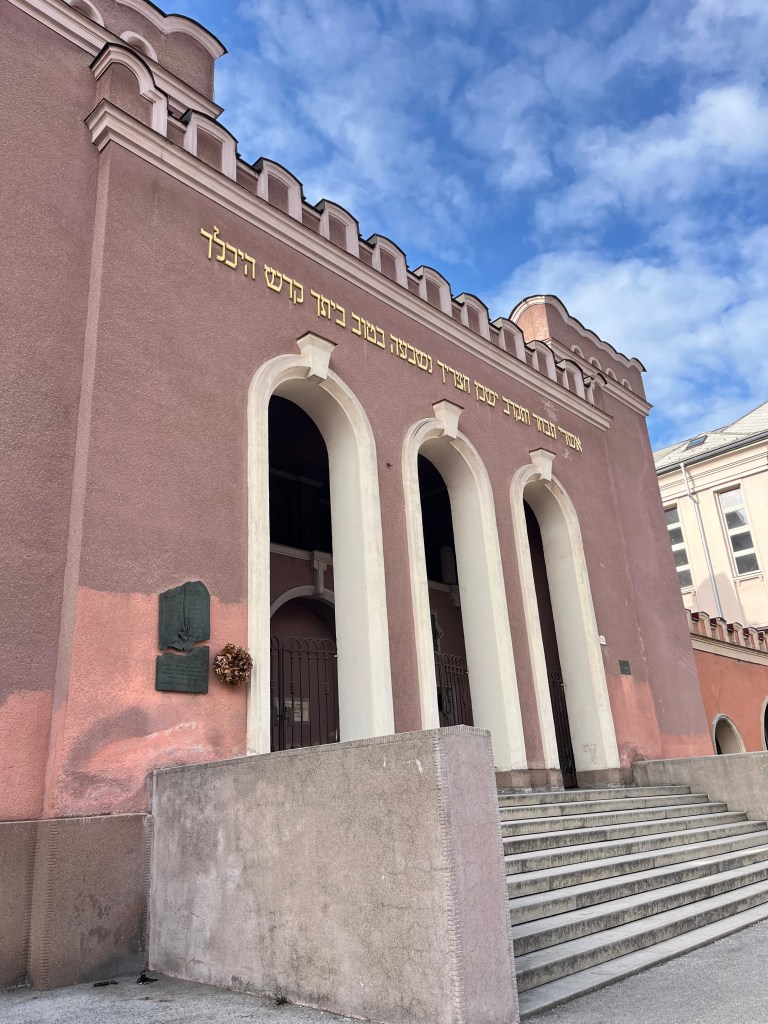
Košice has a rich Jewish history and culture and is home to four synagogues. Most Jewish residents of Košice were sent to Auschwitz and today there are only around 250 members of the Jewish community. The Orthodox synagogue was pretty much next door to my apartment and I would have loved to have been allowed to enter to see inside but I since found out that the interior is unrestored and free public access is not usually allowed. I recently took a 23&Me DNA ancestry test and discovered that I have some Ashkenazi Jewish ancestry and am keen to learn more about it as nobody in the family had had any idea until the tests came back.
My mum’s results actually stated a small amount of ancestry from Košice but it didn’t show up on mine (genes are like a bag of marbles analogy but we still would share the same ancestors even if those particular genes aren’t present in me, if that makes sense!).
Quite expected from a short European city break with no set itinerary, a lot of the focus is centred around food. Breakfast today was at a pretty little cafe called San Domenico Caffe, near the Dominican church, on a quiet corner a few minutes away from the high street. The staff were lovely, the music was chilled, the food was excellent and there is even a little children’s play area with wooden toys and flowers which would be great for anyone holidaying in this city with young ones.

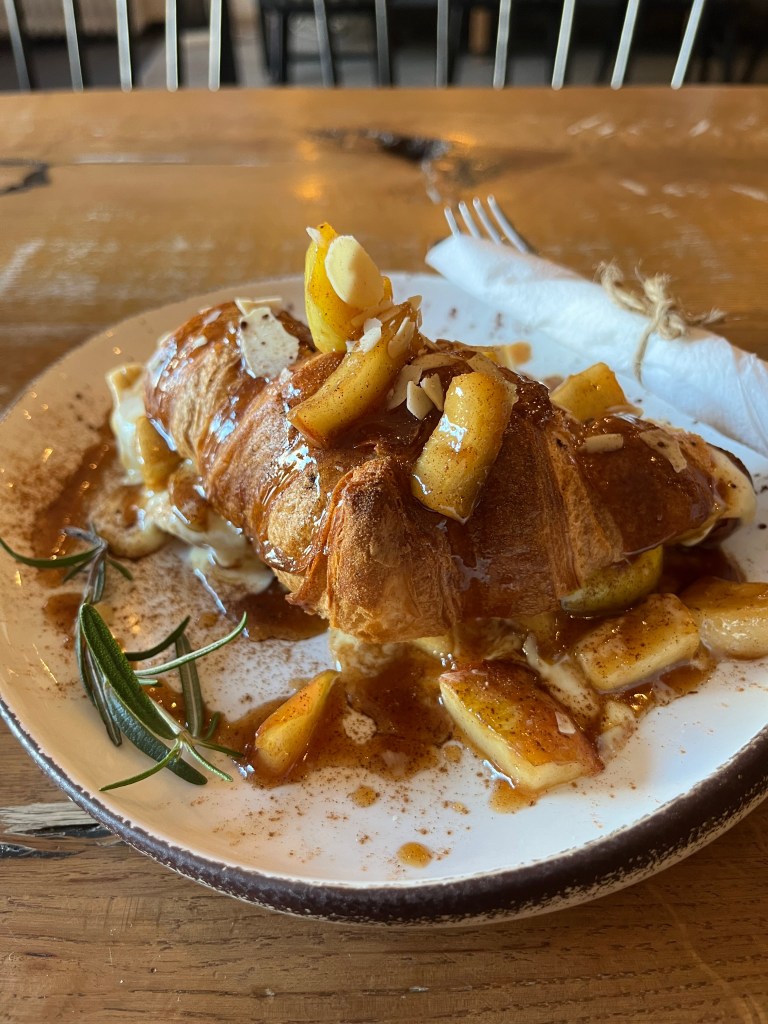
I had one gorgeous cortado then a sweet breakfast which is unusual for me as I usually prefer savoury. This was the lightest flaky warmed croissant filled with whipped mascarpone and white chocolate, caramelised apples and cinnamon with a sprig of rosemary to cut through the sweetness… just wow.
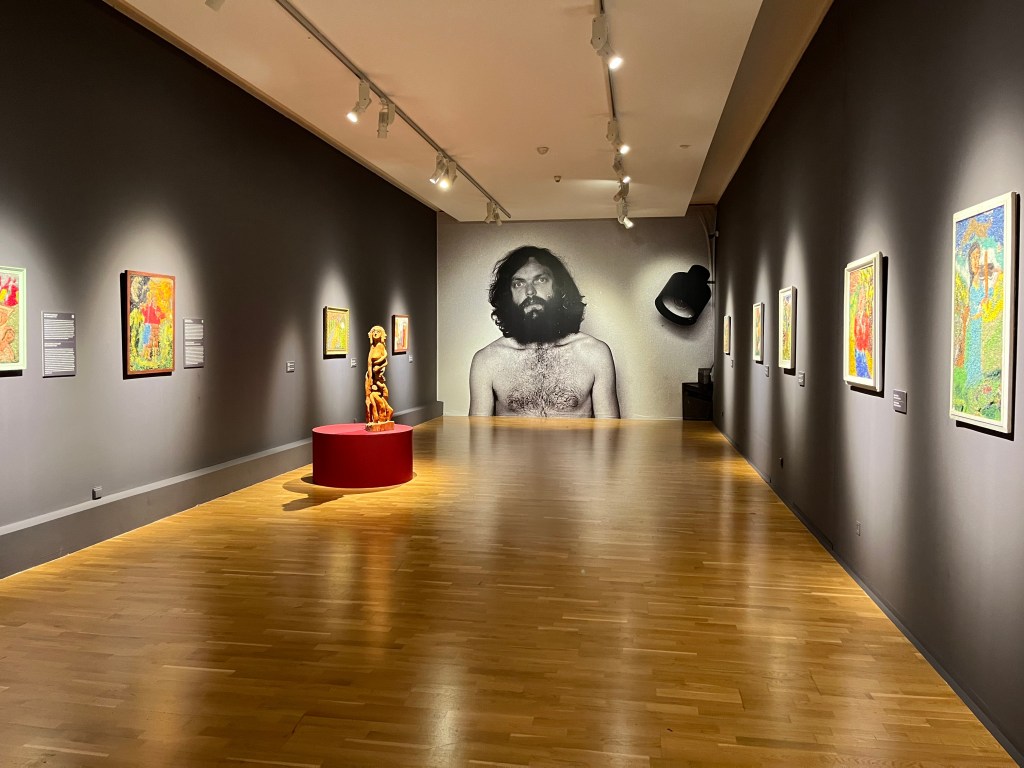
Fuelled up by caffeine and sugar, I walked back through the city to the East Slovak Gallery . The entry ticket was only 4 euros and they only had one exhibition on but it was worth it to see a different type of art and learn about a new artist.
The exhibition was called ‘Only with me can you hear the grass grow’ by the late Roma Slovak artist Rudolf Dzurko who pioneered a technique of crushing glass with a grinder and using it to depict abstract scenes. He had day jobs throughout his adult life, only having time to create outside of working hours- I love this as we are so saturated by the art of financially privileged people who have the time to create and publicise their work which diminishes how much working class or indeed Roma art we get to view/read/hear.

I tried to find a Hungarian restaurant for lunch given that there wasn’t much in the way of traditional Slovak restaurants and walked out of the old town and into the more industrial and slightly ropey looking outskirts, following GPS. When I arrived, the menu board had things like pineapple pizzas and many other curiosities that were definitely not Hungarian so walked back into the old town, unsure of what I fancied or felt like to eat after that.
My friend Sally had been to Košice in 2023 and recommended a lovely pub called Pokhoi, tucked away up an alley off the high street. I don’t normally bother drinking beer unless it’s a very hot day but in a pub stocked with all sorts of intriguing ales, I asked for a Slovak beer but I forgot its name. I ordered a small camembert with local honey, pickles and guindillas as a bar snack which was really good as a combo of textures and flavours and I didn’t even feel I needed anything more to eat for a good while afterwards. Music was psychedelic rock which again, isn’t my usual preference, but that’s a thing I love about going new places and experiencing new things- it broadens your horizons. You can always try things and decide it’s not for you.

The people in Košice were lovely and friendly and some spoke English but I would advise you to download the Google app and use the camera translator to scan over menus as they were all in Slovak (understandably!).
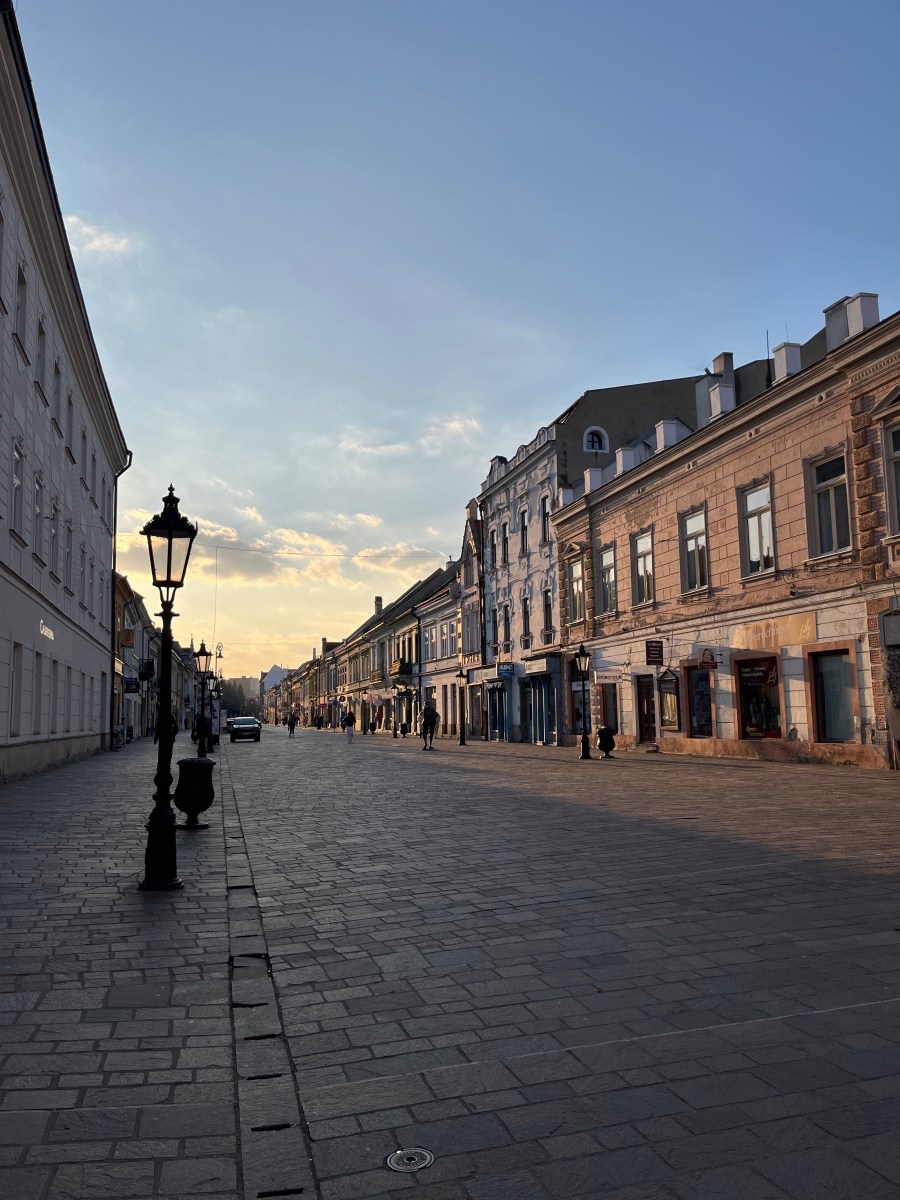
As my second day was coming to a close, I wandered down the streets in golden hour and took this photo which is currently my laptop background:
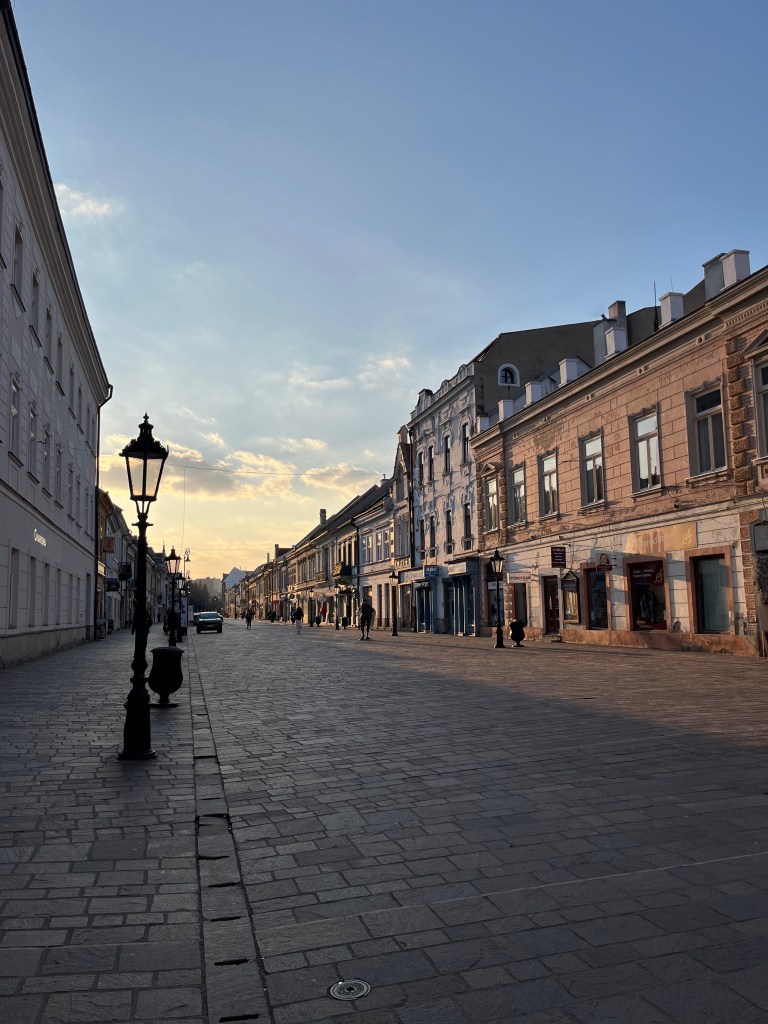
I love going into supermarkets abroad and felt too tired to go into a restaurant so picked up a basket and got in the usual paprika crisps along with some smoked Slovak cheese and crackers and had that for dinner.

The next morning, I booked a taxi with Bolt to take me to the airport and this was the opposite experience of the cancelled Uber when I first landed. A lovely driver pulled up a few minutes after booking and chatted to me and I added a tip to the fare because he was so nice and it only cost 11 euros so wanted to add a little bit more as I appreciated getting to the airport on time and without fuss.
Two days is definitely enough to visit Košice as it’s small and there is not an awful lot to see and do but there is a beauty in that in itself; having the time to wander without an agenda, not be a part of mass tourism blocking streets with selfie-taking, long queues, being ripped off and a lot more that comes with more frenetic cities was something to enjoy.
I would have stayed longer if it was the right time of year to go into the High Tatras mountains and now I know more about them and how stunning they are from online reading, I will return to that as I wrote earlier (and as a gateway to another part of Hungary) and my cousin and I really want to visit Bratislava as part of a Danube trip with Vienna and Budapest so I am sure I will be in Slovakia again soon enough.
Have you been to Košice or the High Tatras mountains? What would you recommend for a visit there?
Until next time!x
 Laur On Tour
Košice, Slovakia, is a charming and safe city perfect for a solo female traveller looking for a relaxing city break. With its beautiful Gothic architecture, friendly locals, and affordable prices, it’s a great place to explore without the crowds of more popular destinations. Highlights include the stunning St. Elizabeth’s Cathedral, delicious traditional Slovak food like pirohy, and unique local experiences like eating soup from an edible bowl. The city offers a peaceful, less touristy vibe, making it ideal for leisurely exploration and cultural immersion.
LikeLike
Pingback: What to do in 24 hours in Riga, Latvia, as a solo female traveller – Laur On Tour