

Many people say that they would love to learn Spanish.
Plenty of things can get in the way of this: time, jobs, family commitments, other hobbies and more. However, I find that one of the key motivators is in having a reason to learn.
I learned Spanish to live in Spain. This meant I had to become fluent so I had the language skills for all situations: at work, socially, going shopping, seeing a doctor, communicating with hairdressers, dentists, landlord and so on.

What if you’re going on holiday to Spain for a week? What if you visit Spain once a year and know that you don’t need fluency but would like to be able to communicate needs and wants and to be able to chat with local people and show appreciation for their language and culture? Nobody wants to feel like the ignorant native-English speaker who rolls up at any destination around the world and just expects everyone to speak their language with zero effort to attempt theirs.
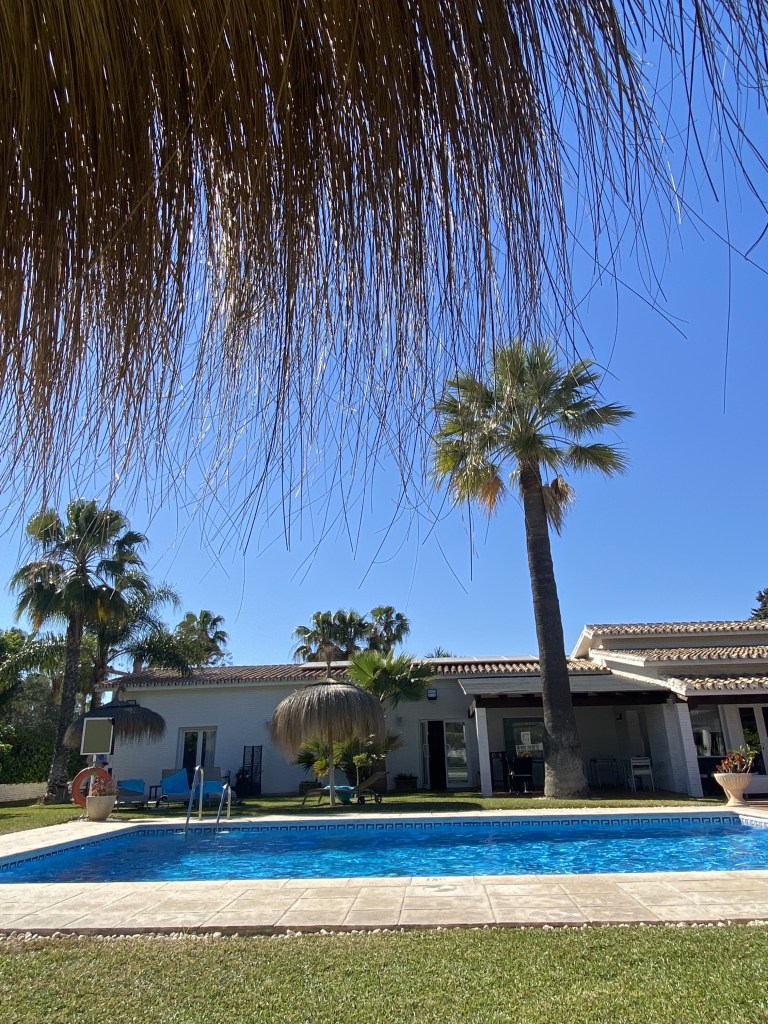
But how do you learn this amount of Spanish, tailored to holiday and tourism purposes, if all resources online are for learning the complexities of the language to fluency? Nobody has time to sift through complicated grammar and useless vocabulary when all you want to be able to do is ask for the bill, ask for directions, say that you like something or ask how the other person is doing today.
Well, let me introduce my short, simple and concise guide to holiday Spanish: ‘Sol Spanish’.
This is castellano Spanish, which means the Spanish that is spoken in Spain (not Latin American countries).
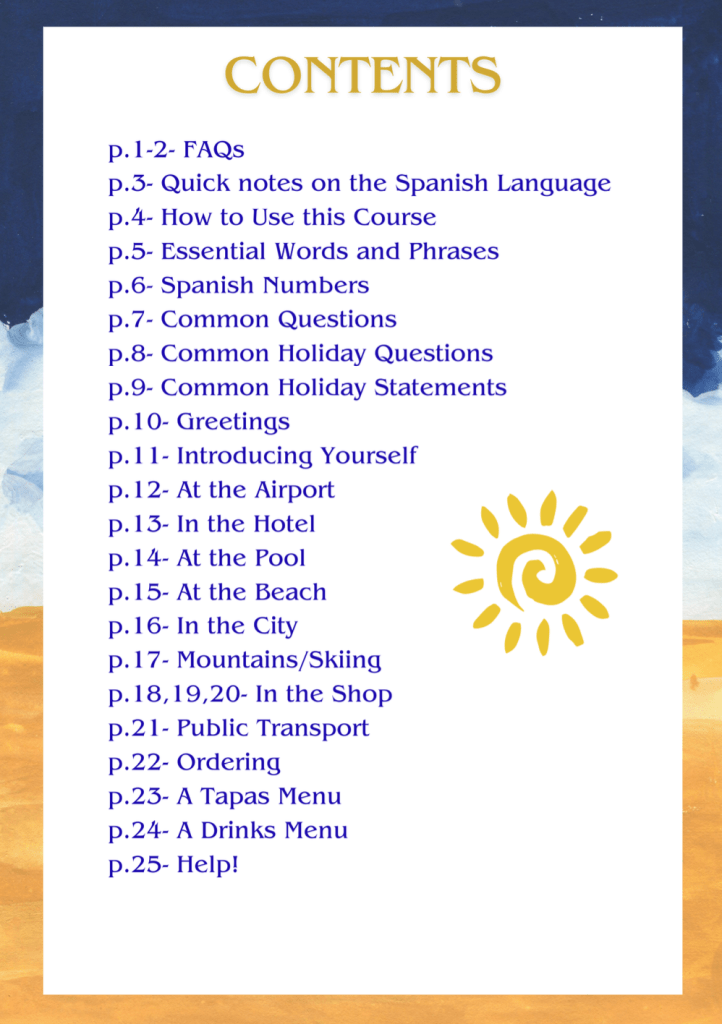
In this short guide of just 25 pages, you will find the vocabulary and phrases you will need for holidays in Spain whether they be at the beach, in the mountains or in the city.
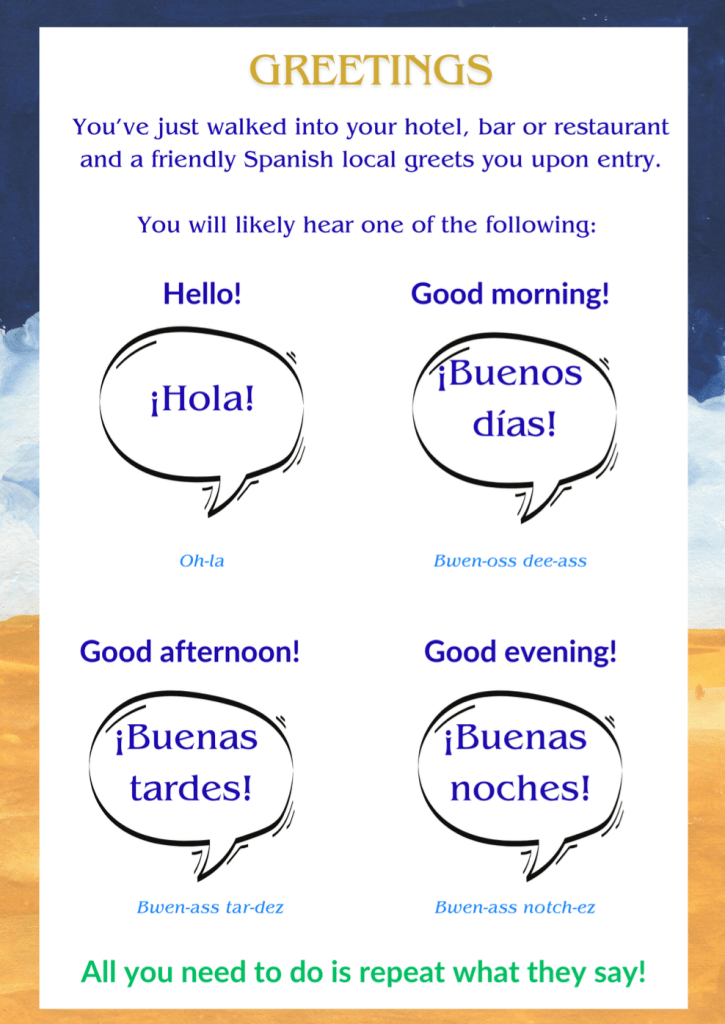
The waiter asks you where you are from. The chef in the hotel doesn’t speak English. You want to catch a bus to a nearby town and need to tell the driver what tickets you need. You need help but nobody around understands you. You are having a coffee and a Spanish person on the next table strikes up small talk with you. You want to be polite and friendly. You want to ask how much an item costs at the shop. You want to ask for the bill.
Not everybody in Spain speaks English, even in the tourist hot-spots!
I have been to markets in Marbella and bars in Benidorm Old Town and I met people who did not speak English. It is best to be prepared and communication is what connects us to people; people are places and places are people! Our travels are so much more enriching when we can communicate.
Any questions, please email me at laura@wordcraftworkshops.com
 Laur On Tour