

Bilbao, the capital of the Basque region in the very north of Spain.
Admittedly, I knew very little about it and had never visited any of the more northern cities in Spain such as Vigo, Santander and San Sebastián. My sister’s colleague had returned from a trip to Bilbao earlier this year and sang its praises so we, and our cousin, booked on for five days this August to see what it is all about.
The Basque region spans a certain region across some of the north of Spain and some of the south of France, connected by the Bay of Biscay. They share a common language called Euskara, or Basque (easier to say for English speakers!), and there has been a political Basque independence movement for several decades which included the separatist group ETA who sadly utilised violence and terrorism, including bombings at Madrid airport in 2006.
The majority of Basque people, of course, did not and do not advocate for violence and times have moved on into perhaps more unity and acceptance of others.
In fact, today, Bilbao is a very modern, international university city where people from many backgrounds study, work and live together in what feels like the friendliest city we’ve experienced in Spain.
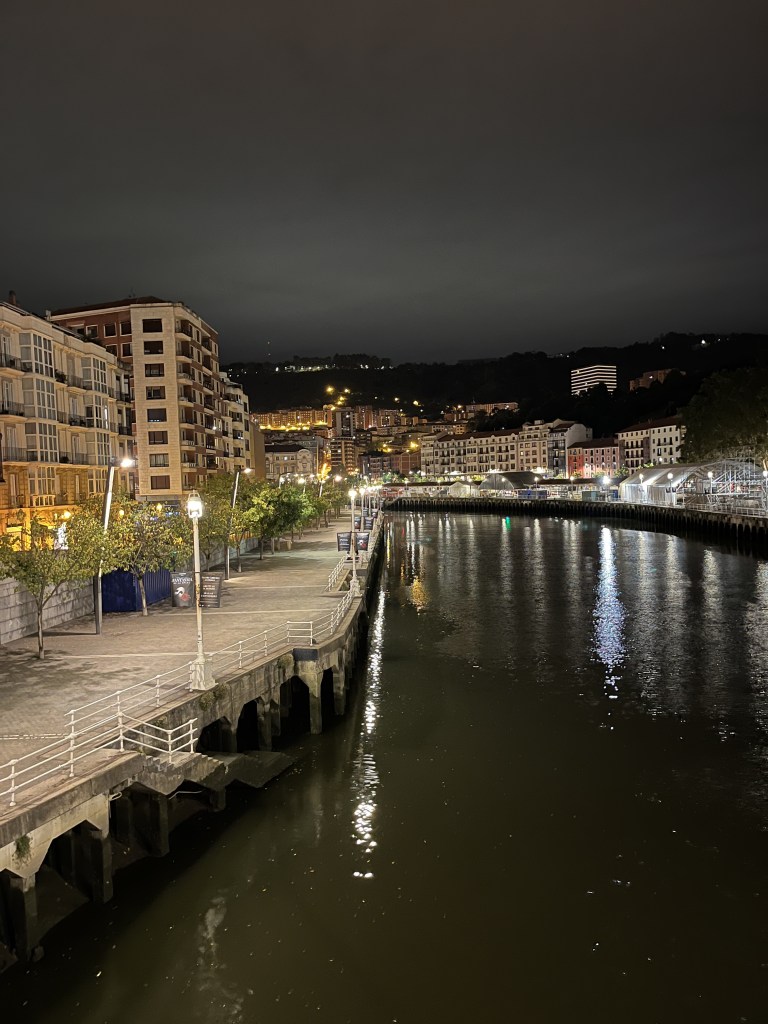
We arrived fairly late into a mild evening only had time for a night walk along the Río Nervión, the river which runs into the Cantabrian Sea, to see the water illuminated by the surrounding buildings set back into the Basque mountains.
The Spanish Basque region, Vizcaya, is well-known for its food, especially San Sebastián which is home to several world-famous Michelin-starred restaurants.
Bilbao is most synonymous with the pintxo, which is as much a concept as it is a food item. Well, not the stick, the pintxo, itself, of course, but the edible savoury food skewered by the short wooden sticks. (The Castellano verb for puncture/pierce is pinchar).
It’s a genius food concept as dozens of them are displayed under chilled counters usually assembled with a small piece of bread topped with things such as fried egg, chorizo, a wedge of tortilla de patatas, jamón, tomato, cheese or various other Spanish favourites.
You choose-as-you-go whilst propped up at the bar on a high stool, sipping a cool beer or chilled glass of wine, then when you’re ready to pay, the waiter counts up your sticks (palillos) to work out how much you owe!
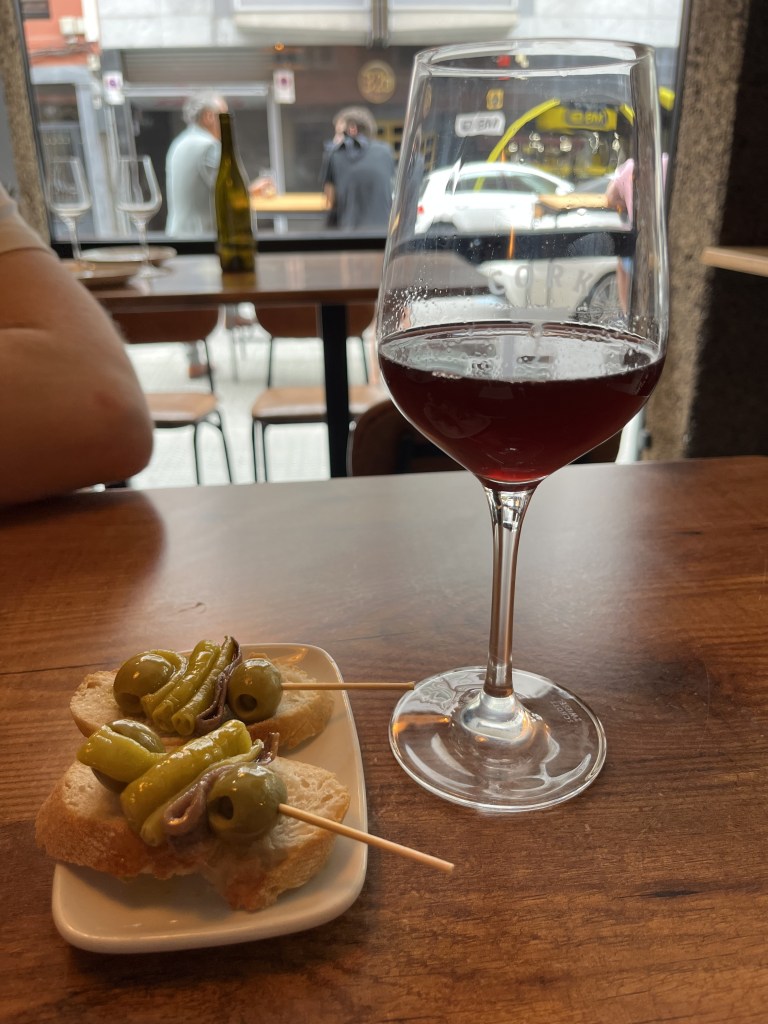
The pintxo you see in the above picture is a gilda, another food invention from Bilbao, consisting of an olive, an anchovy and a guindilla. I LOVE guindillas, a thin green pepper which is surprisingly picante for Spain, where spiciness is largely absent from their cuisine.
There’s a joke along the lines of The Princess and The Pea fairytale which is that you could plant a tiny speck of spice in the food of people from various countries and you’d spot the Spaniard right away by being the only one to react to the burn! Anyway, guindillas have quite the burn and I can only manage around three before they get too much.
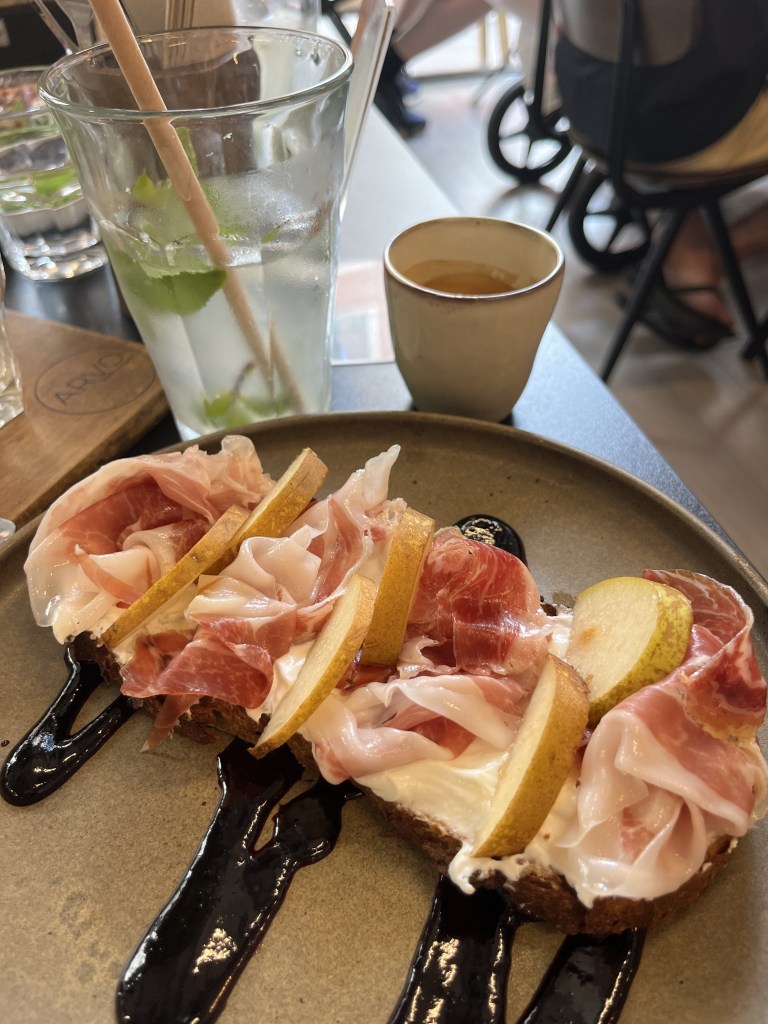
With all this said, our first lunch on our first full day was over at ARVO Specialty Coffee, round the corner from the Guggenheim museum.
I had a beautiful double espresso and homemade lemonade with mint to drink and sourdough with whipped cream cheese, apple and jamón.
We had to sit outside in the sun for around 20 minutes waiting for a table to become available but it was worth the wait for the lovely food and friendly service.
Picture minimalist decor, cool plates and serving boards and mellow music, ideal for regaining a bit of energy before going to explore the city.
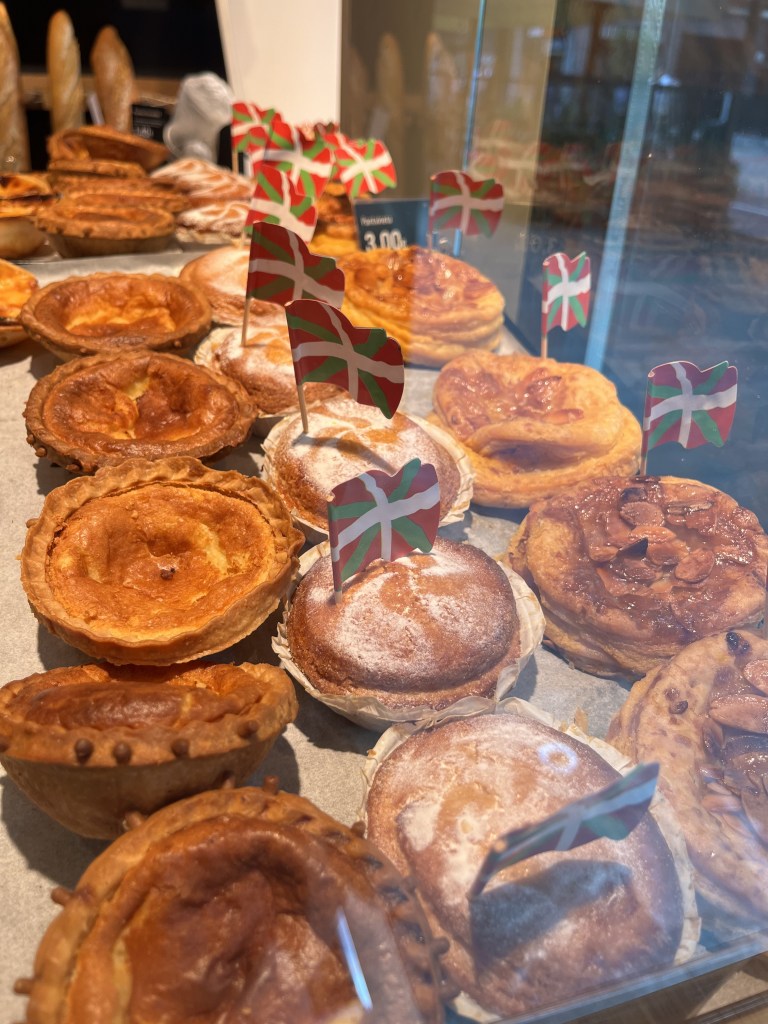
After this, my sister and cousin wanted to try the famed ‘Pastel Vasco’, a sweet pastry filled with a vanilla creamy filling and topped with frangipane. I have lost anything of a sweet tooth I may have had when younger and don’t often feel like desserts so I didn’t have one but I am sure I missed out judging by how beautiful they said it was and by several YouTube videos we watched on Bilbao food culture before we arrived.
Enough food for now, we went for a walk and were surprised at how chilled Bilbao is of a daytime. It was August and most students would have returned home, explaining the emptier streets, and the weather was ideal at a pleasant 27 degrees (considering that in Andalucía, the other end of Spain, summer days average around 38-40+).
As I had lived in a former Moorish part of Spain with the influence still evident all over, Bilbao’s architecture, street design and even street signs looked remarkably different to me; sometimes it resembled certain parts of France or Italy, but there were still plenty of hallmark Spanish reminders such as the music playing, most of the language being spoken, and the presence of tapas restaurants.

After a wander around and a beer at the bar outside our apartment, we nipped up to shower and change for the evening. As with any summer holiday to Spain, it’s always a good idea to pick up some cans of Fanta Limón and packets of Lays to have stashed back at the hotel/apartment.
We got ready to some music then wandered up the high street to find somewhere good to eat for dinner which wasn’t just casual pintxos, when we came across ‘Bassko’, a variation on the spelling of Basco/Vasco (Spanish pronunciation of ‘b’ and ‘v’ can sound the same).

The vibe was dimly lit with soothing piano music, immaculate tablecloths of what felt like white Egyptian cotton and a fabulous menu.
Luke and I shared a lovely bottle of Ramón Bilbao Rioja while Sammy had a couple of glasses of the local white- Txakoli (more on that after).
I recommended we share a ración (full size plate) of huevos rotos (‘broken eggs’) as it never fails and is basically sexier chips and egg. Being in a fancy restaurant, it was of course fancier than your every day bar tapas versions with the potatoes finely sliced and lightly fried, topped with silky soft jamón, fried eggs and chives.
The other dish we shared was something I was surprised to see on the menu, a dish from Córdoba where I used to live called San Jacobo which I never really liked, just being a greasy fried breadcrumbed parcel of dense ham and bland cheese, not too far removed from being a Findus Crispy Pancake! (Remember them?)
Yet, the description sounded far better than what I just wrote so we decided to give it a go, and although the picture makes it look like a beige toasted rectangle, inside it was gorgeously light, with a fine melty cheese and loads of flavour; think comfort food but upgraded.
If you are in Bilbao, I recommend a trip to Bassko and the bill was much lower than I expected considering how good the food, drink and service all were!


Spanish nightlife kicks off much later than in the UK and perhaps other countries, so when we got out around 21:30, the streets were only just beginning to fill up with people enjoying a Friday beer and there was a bit of a buzz building. We stood in the street sipping our drinks, a bit slow to the party at first, observing and getting a feel for how a night out would be.
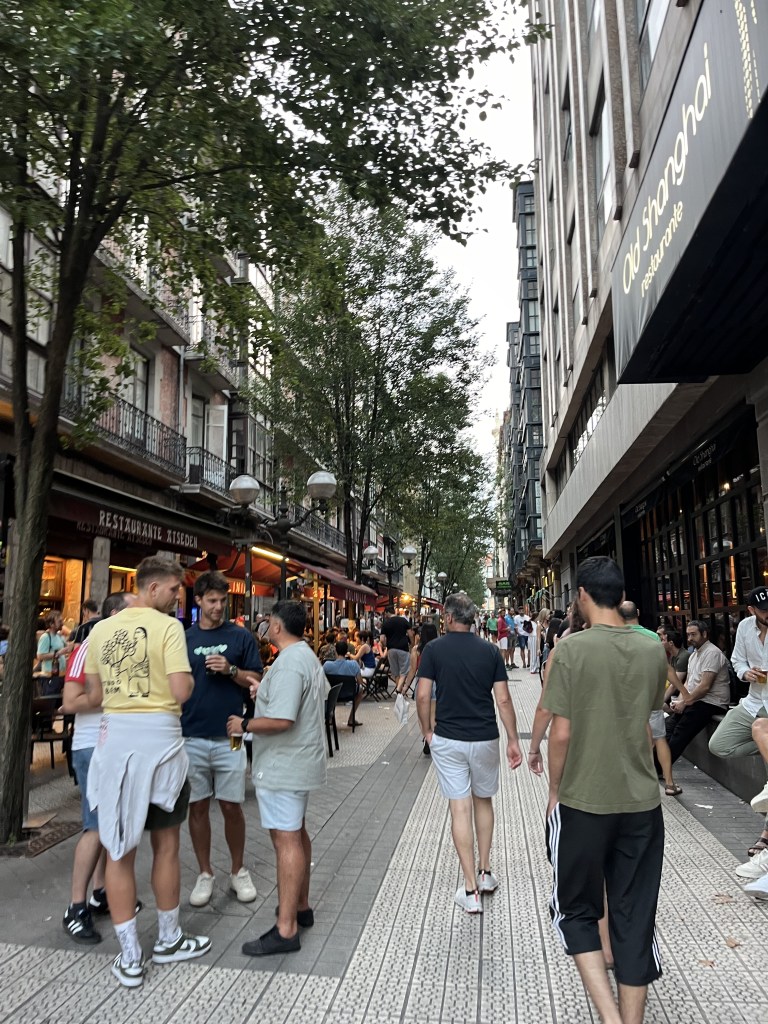
We turned the corner to the next bar and found a group of men sat in a circle with their beers, ciggies and guitars, enjoying a good old sing-song with flamenco clapping, singing and guitar.
They weren’t performers or hired by any bar, they were just a group of friends enjoying themselves and it was lovely to see until somebody shouted down from their apartment window telling them to pack it in.
It seemed a shame, but I suppose it would be different for someone living above the bars, constantly exposed to street noise.

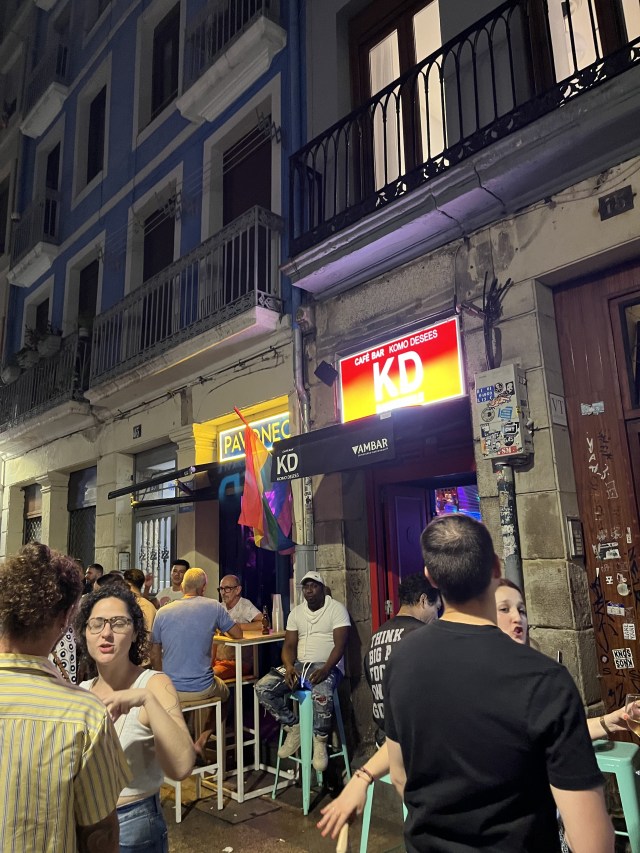
We moved on. One bar draped in rainbow flags and Cuban flags seemed fun so we ventured in, thinking we would just have the one then move to the next bar.
We ended up spending the whole night there til about 3am as the tunes were brilliant, the lovely bar owners, a married couple from Cuba, let us choose songs, and after a while, we are sure a few free drinks and shots found themselves on the bar, perhaps in a bid to encourage us to stay.
There, we chatted and danced with them, three French Basque brothers, a group of men from Morocco and various others and it ended up being one of those nights where you are creased with laughter over things that might sound silly here now.
Kenya, a fabulous woman hailing from Cuba, provoked everyone and encouraged us to dance like her which resulted in aching legs for days… it’s all fun and games until the next day once you’re in your 30s!
Make sure you drop in to see them at Bar KD for a brilliant night out.
The next morning, we managed to escape not feeling too rough really,
Later that afternoon, after having a good walk around the city centre and stopping off for pintxos and a cerveza, we stumbled across this fabulous place:
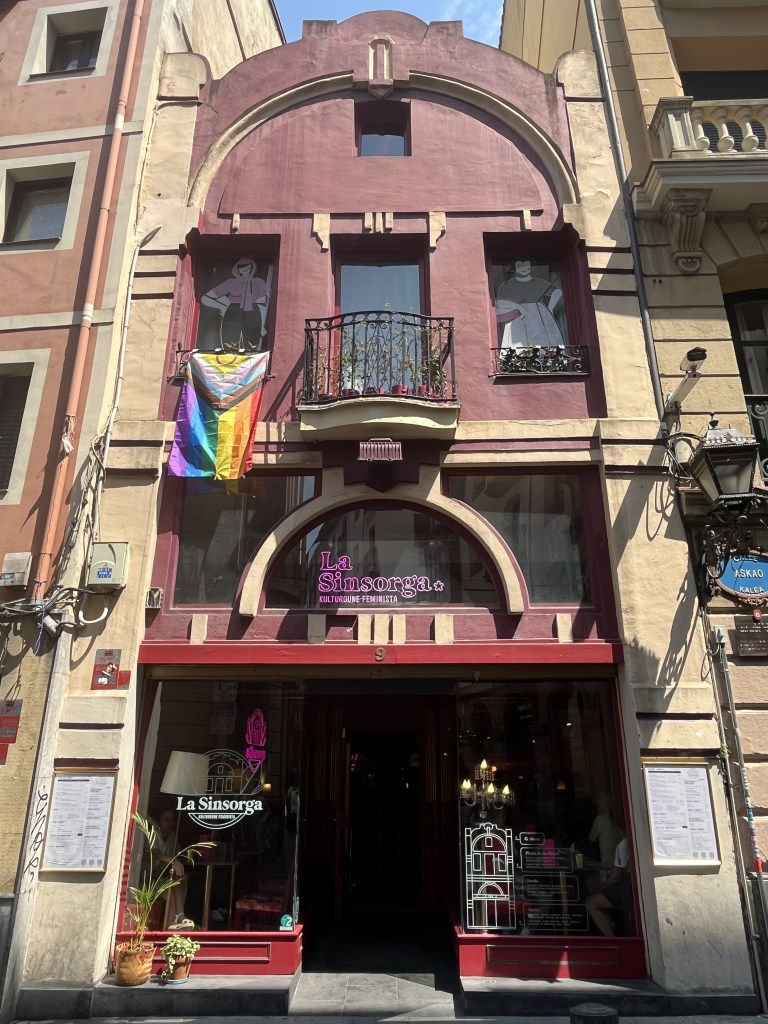
La Sinsorga is a feminist culture centre housed in a bar and restaurant in the Casco Viejo (old town).
It is quite rare really to see a place so proudly feminist when feminism can sometimes (erroneously) be waved away as a dirty word. That’s ridiculous anyway, as most feminists I know, including myself, only wish for women to feel safe around men and free of violation and subjugation, with no ire or ill will against men whatsoever, loving men and willing social harmony.
‘La Sinsorga’ is an informal Basque term which loosely translates as ‘shallow’ or ‘uncultured/lacking profundity’ which has to be ironic here or a reclamation of a way to dismiss women.
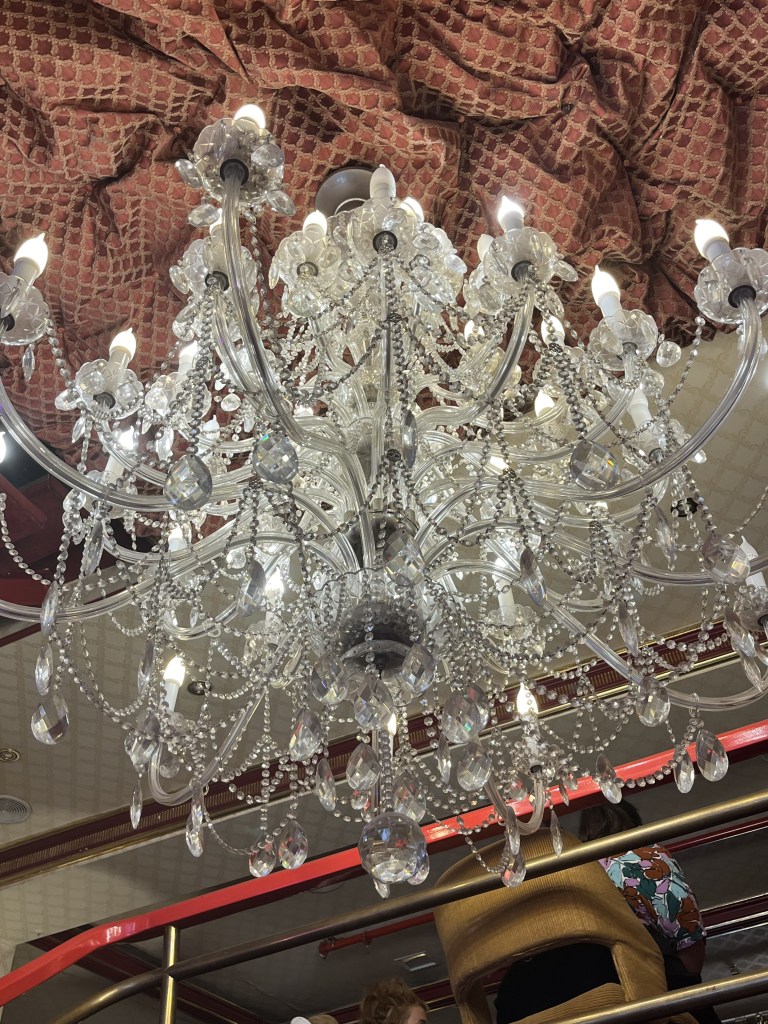
The interior design is bright pink and unabashedly ‘feminine’ with a massive twinkling chandelier, and the music meanwhile, is punk and rebellious, recalling La movida (post-Franco dictatorship freedom and creative boom of the 1970s/80s). There is a merch store upstairs selling T-shirts emblazoned with feminist mantras, books, badges and other accessories.

I remarked to the woman working behind the bar, perhaps the manager or owner, that it was great to see such a place and she said, “yes, it was needed”. It feels distinctly belonging in Bilbao, a city that has long pursued progress and resisted control (not to forget ETA here but in Summer 2024, it made total sense a feminist cultural centre and bar would be there in Bilbao and not, perhaps, in other regions of the country). As a side note, they do a stunning Bloody Mary!
Afterwards, we went for a stroll up the river bank but the heat was rapidly increasing and we had to occasionally sit down on benches which were also scorching!

The Basque region of Spain is known for its moderate temperatures during summer so THIS was not normal or congruent with the weather the rest of that week or month, even:

I had experienced that living in Córdoba many times but it felt more of a shock here, given how mild the day before had been. In Córdoba, that 48 degrees is part of a long, drawn out furnace and you adapt your whole life around it, avoiding venturing out in the peak sunlight, taking siestas and trying not to do too much for genuine fear of fainting. But when you’re on holiday and want to maximise your time and not waste it away sitting under a fan in your apartment, you just have to drink loads of water and walk in the shade.
We popped back up to the apartment, showered again and changed clothes again, then continued.
Guggenheim Museum Bilbao
A main attraction in Bilbao is of course, the wondrous Guggenheim Museum.
Modern art immerses you from the moment you arrive at its grand site, arrested by the colourful vision of a giant floral dog before the entrance.

This is Jeff Koons’ Puppy, a giant model of a West Highland Terrier which looms over visitors which as a huge metal-based structure, could be Brutalist and intimidating but it’s all cuteness and joy: flowers, colours, a puppy. It is still growing, like a puppy, in the thousands of flowers that form its fur.
Usually, when we see gigantic man-made structures such as gothic cathedrals and disused Soviet-era factories, we feel unnerved and overwhelmed. Puppy, however, is slightly unsettling in the very fact that it confuses us; its massive and towers over all of us but is just a happy and harmless symbol of innocence.
Then there is the building itself: 33,000 titanium sheets welded together in 1997 to a design that fits in with Bilbao’s modern, arty and urban but not quite industrial landscape, with the appearance of the colour changing with the weather, often appearing gold and at other times more of a pewter.

Ticket prices at the time of publishing this blog (December 2024) are as follows:
Adults- 15 euros
Students (aged 18-26) and pensioners- 7.50 euros
Children under 18 and museum members- free
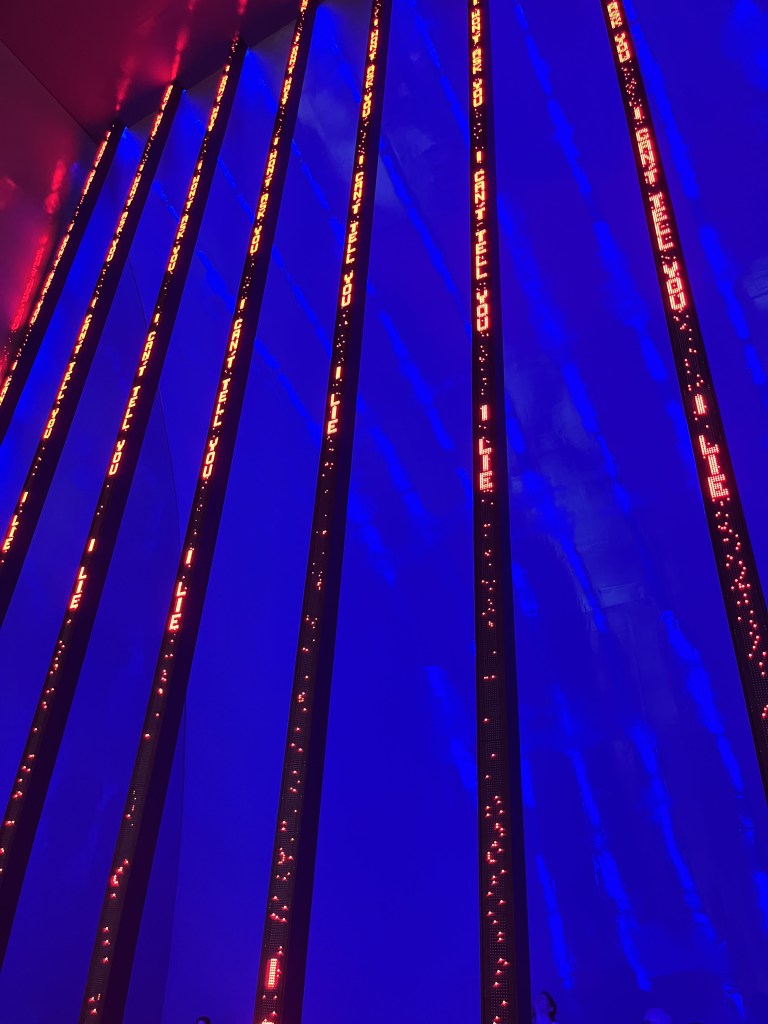
The first artwork that greeted us inside was a rolling light installation called Light Line by Jenny Holzer, displaying fragments of everyday thoughts in English such as “I can’t tell you” and a mix of other agonised or mundane daily worries/ruminations/reflections that run through our minds on repeat that almost feels like being transfixed by 24-hour news banners:
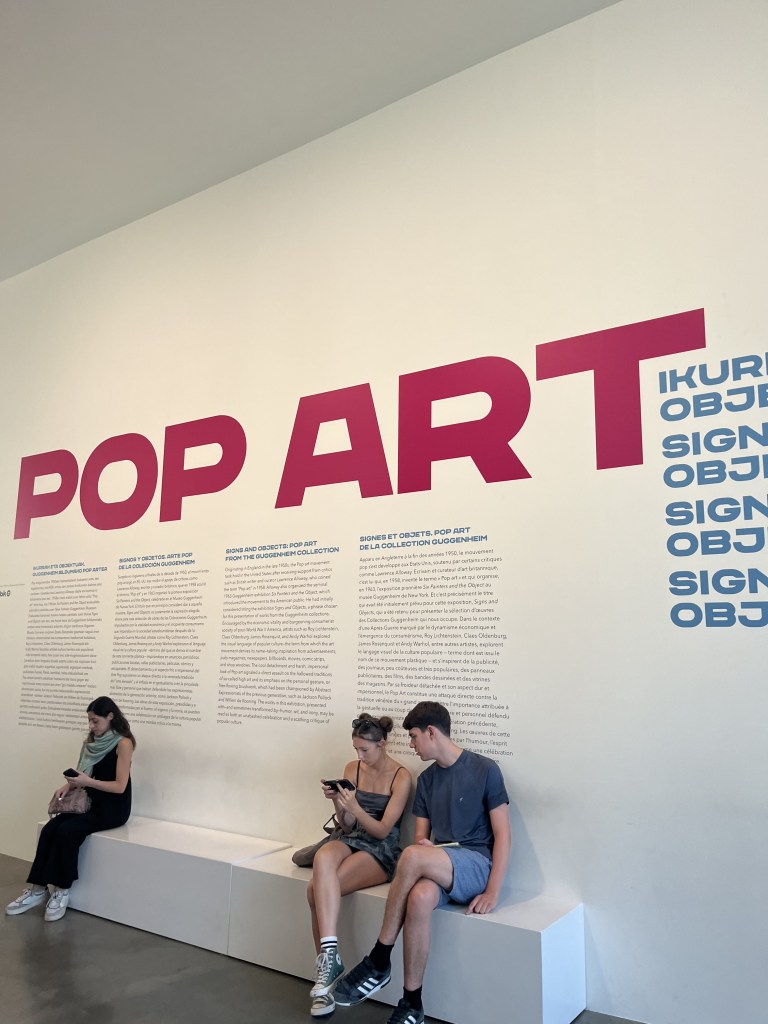
We then moved through to the ‘Pop Art’ exhibition.
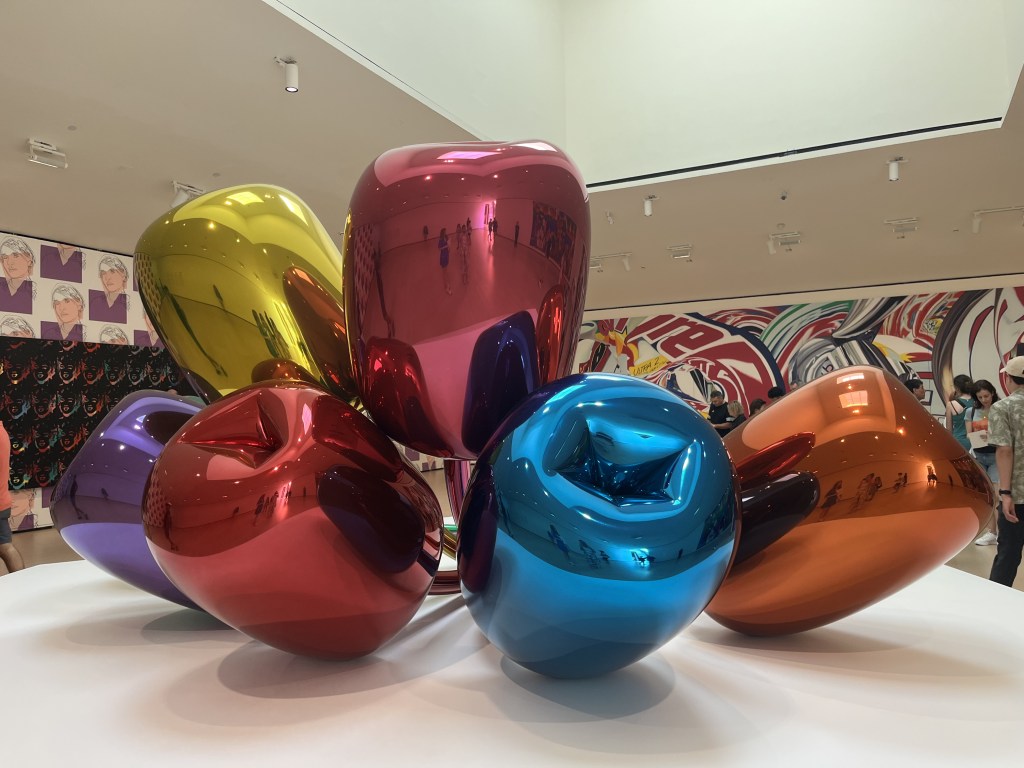
My eyes are naturally drawn to shiny objects and so the first thing I noticed was another Jeff Koons: Tulips. They have a balloon-like appearance but are made from stainless-steel.
This work is part of Koons’ Celebration series where he drew upon mass-produced objects from parties and festivals such as balloons and other emblems of childhood such as Puppy.
Being a lover of language and colour, I was fascinated by the palette wall where colours are labelled by the emotions, feelings and sentiments commonly associated with them given in Euskara, Castellano, English and French:

One of the main exhibitions at the Guggenheim Museum Bilbao when we visited was by Japanese artist Yoshitomo Nara. His pictures seem puzzlingly babyish but upon closer viewing, they belie a lot of angst and discontent with references to intoxication and anti-climactic sex which is jarring against cartoons; again unsettling to be drawn in mainly dull hues:
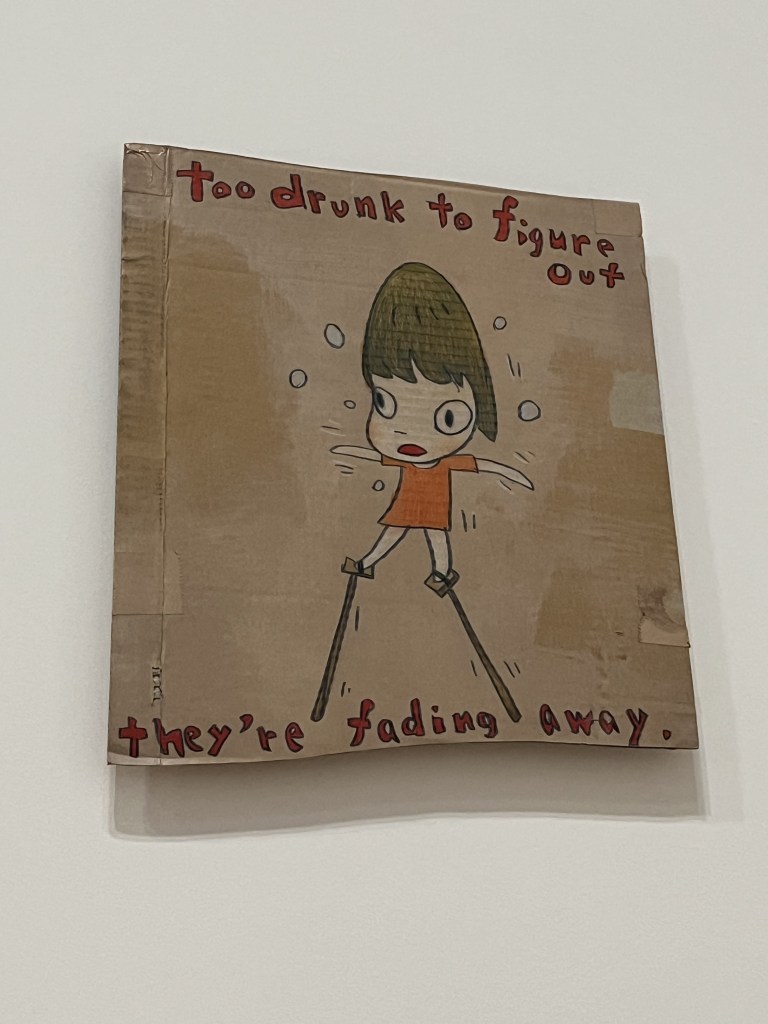

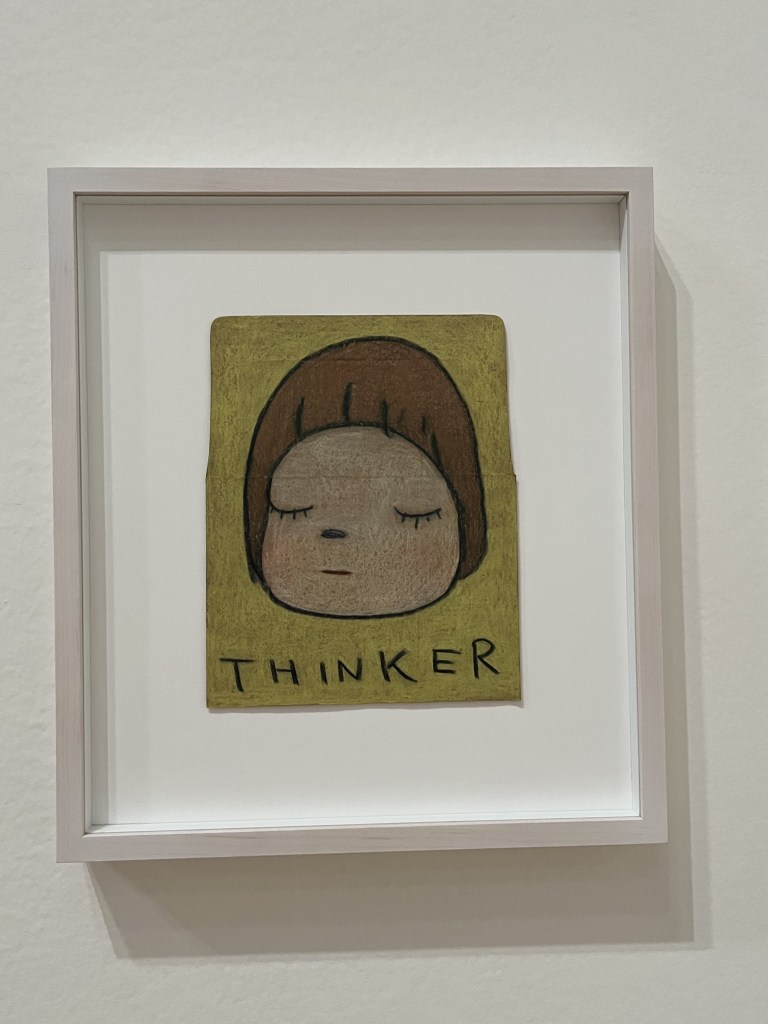
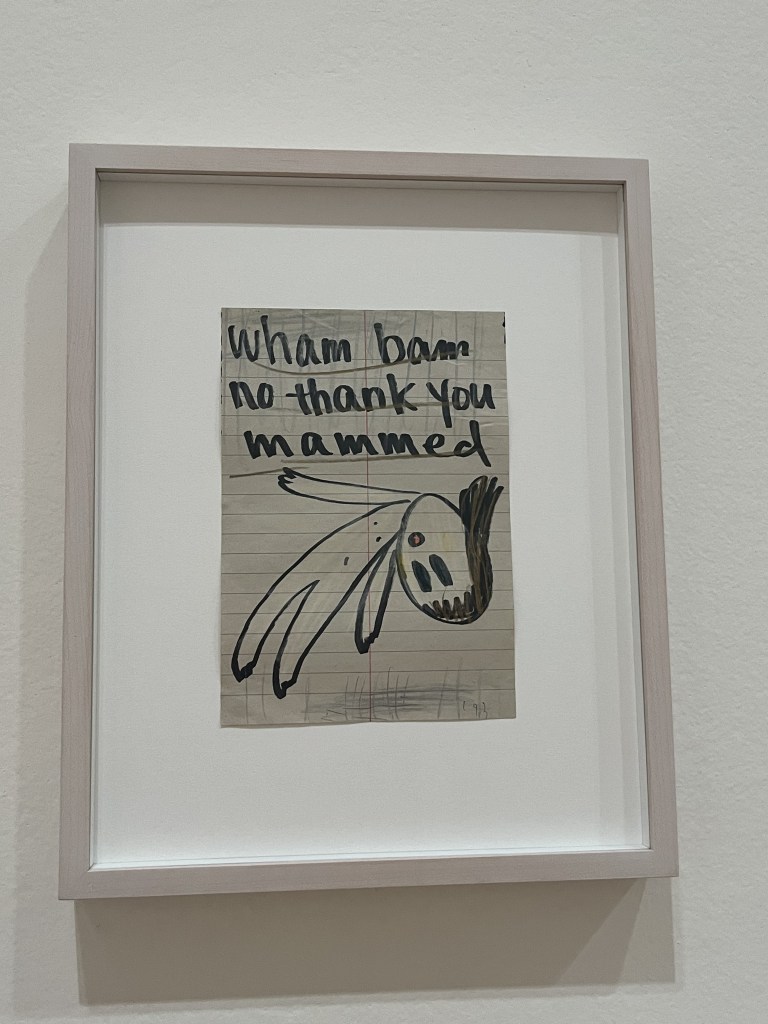
At first, we were a bit non-plussed but we soon found ourselves narrating each pictures with jokes and meme-like references to life, and maybe that was the point?
We felt we were getting the hang of interpreting modern art (which isn’t too far removed from analysing poetry) when we came across Iberia by Robert Motherwell. I don’t have a picture but I can describe it: an expanse of thick black oil paint covering a large canvas in choppy brushstrokes except for a small, untouched corner in the bottom-left. The artist painted it in 1958 upon visiting Spain for the first time while it was deep in the clutches of the Franco dictatorship and all the pain, loss and destruction of the Guerra Civil twenty years prior.
Before knowing this, we gazed upon the black canvas feeling baffled.
“That’s it, I don’t understand modern art”, we each thought to ourselves in private embarrassment.
Then, a voice with a Dutch lilt broke the silence-
“This is the worst thing I’ve ever seen in my life” a young lad of about 21 remarked and everybody in the vicinity fell about laughing at his audaciousness.
No disrespect is intended towards the artist or his artwork; we were the ones who initially didn’t make the link between the title of Iberia to the darkness, not knowing the year of its creation either.
That moment of laughter and silliness between us Brits and those Dutch fellows foreshadowed the night out that was to come hours later…
We then stepped out on to a terrace to view ‘Tall Tree & The Eye’, by Anish Kapoor, a tall structure of 73 reflective spheres situated on a concrete island in the ‘moat’ outside the museum. Again, I am like a moth to light and couldn’t stop looking at how aesthetically pleasing it is, tolerating the blast of astonishing heat that felt like a hairdryer on its highest setting right in the face. You know it’s scarily hot when your eyeballs feel dry.
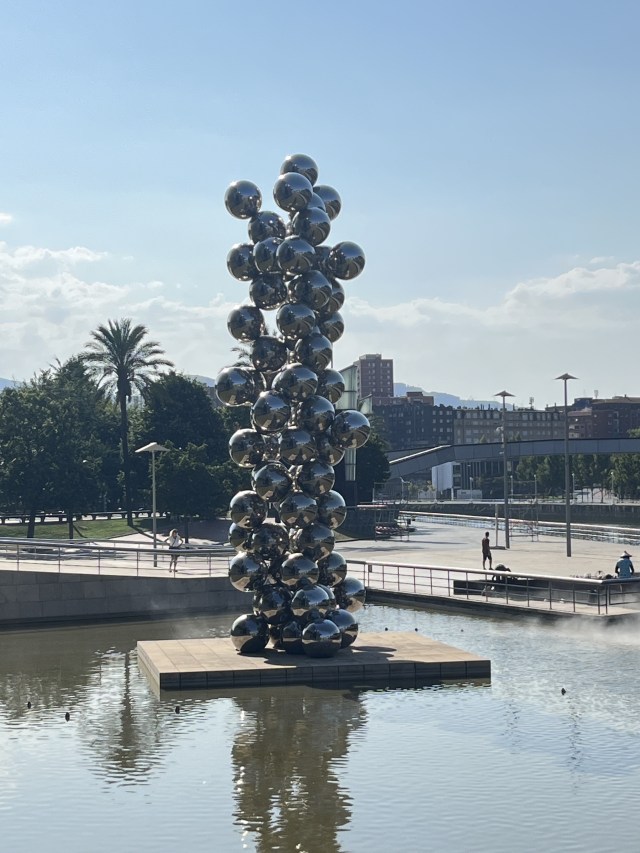
The Guggenheim Museum Bilbao website states that this art installation is all about the interplay of reflection and refraction across the spheres as an illusionist work, ‘simultaneously creating and dissolving form and space’ in the reflections of the surrounding cityscape, a curious mix of palm trees and high-rise tower blocks and bridges.
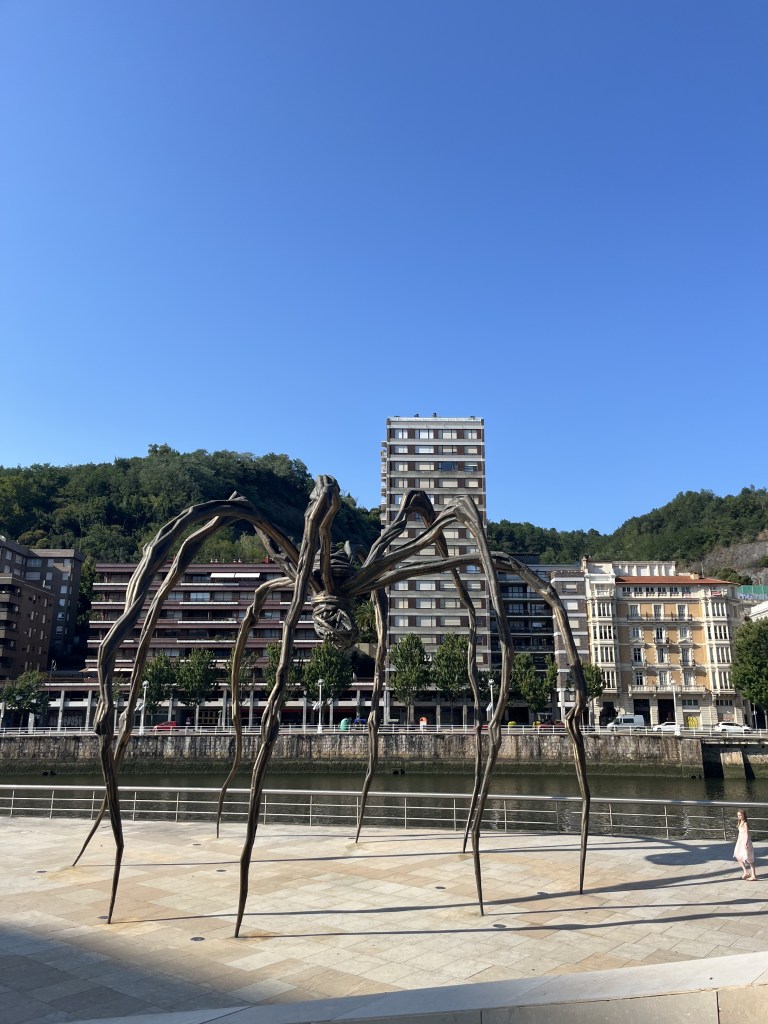
Finally, we three arachnophobes reluctantly approached Maman, THE metallic spider structure created by Parisian artist Louise Bourgeois. How peculiar, naming a spider ‘mum’! Why?
Again, only finding out why later by reading on the website, it turns out that spiders are a motif in Bourgeois’ work and her mother was a weaver, as is the spider. Its legs take on the form of gothic arches which are at once unsettling as cage-like and predatory meanwhile standing elegantly and vulnerably upon thin legs as protector of its eggs. I’m starting to feel creeped out even writing that :s .
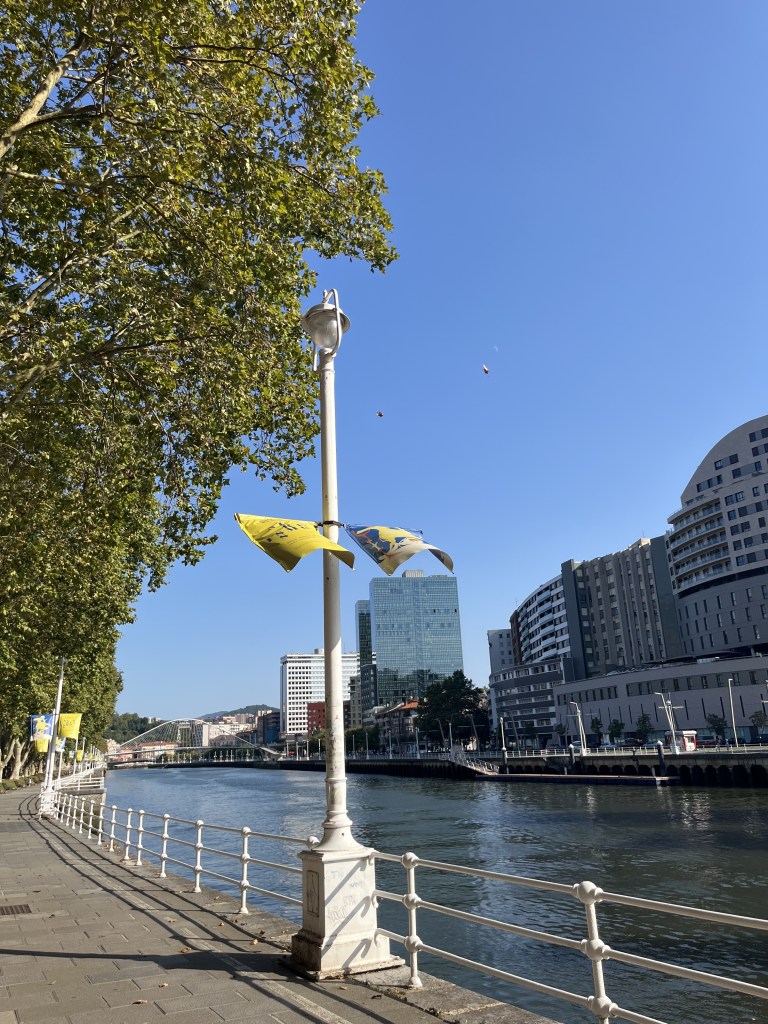
By this time, we had visited almost all exhibitions in the museum and it was time to cross over the bridge to the other side of the river for what would be a highlight: wine tasting at Gastronomía.
We arrived at the cool (literally and figuratively) venue on Plaza de la Salve shaded by trees gasping for a drink… of water. As I say, I lived in extremely hot conditions for four summers but this still hit as a shockwave and I am declimatised now, anyway (I say this sitting at home in blustery Liverpool on a cold December evening four days before Christmas!).
Our host for the evening, Alex, greeted us and showed us to the private room where we could firstly and pre-emptively rehydrate with beautiful crystal clear agua. He had already laid out the culinary pairings before bringing his wine choices through and it was already clear that this was going to be good, very good indeed.

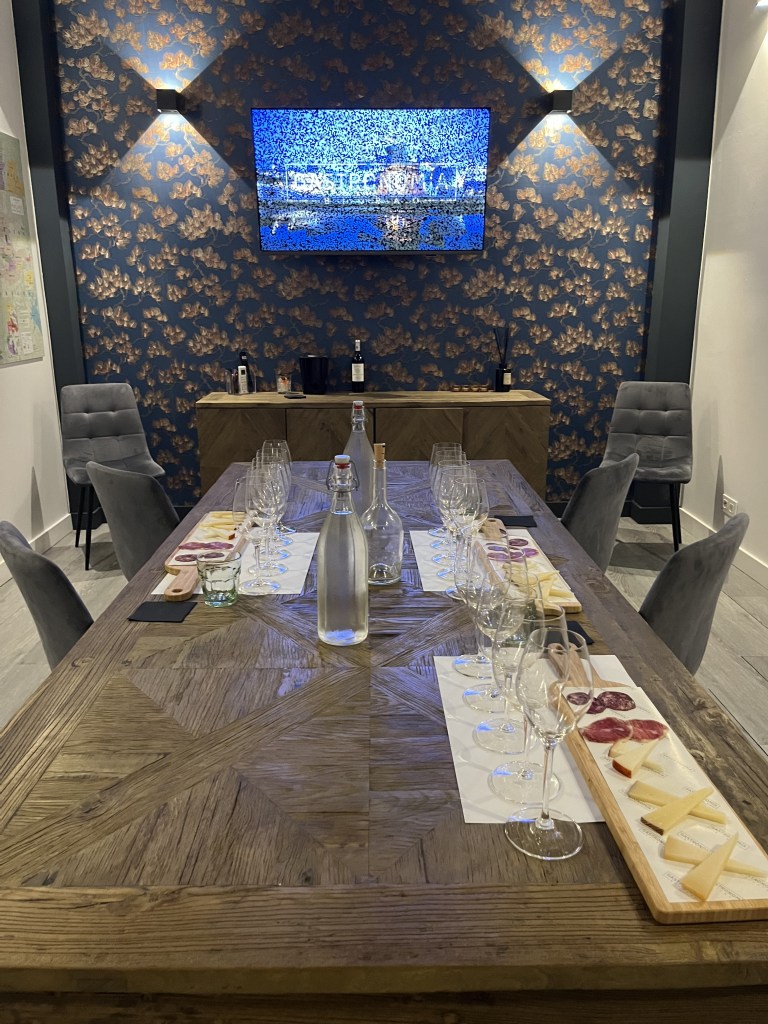
I wish I had finished writing this blog entry back when I began it in August as I would remember all the names of the charcuterie but visuals will do now. It’s been a busy term of new teaching jobs and learning many names and systems etc.
Alex introduced himself as our sommelier and his infectious geniality and expertise became immediately apparent. He talked us through the wine regions of Spain with maps and asked us questions to gauge how well versed we were in wine/Spanish wines. I mainly knew about Rioja, Ribera del Duero and Cordobés finos.
Alex’s announced that his first wine for us was a Cava and the word immediately brought back memories of cruel and harsh headaches after only two glasses. I hadn’t touched the stuff in give years. Alex reassured us that this would change our perceptions as we generally only get to try mass-produced Cava exported to Britain whereas the one he served us had the freshest, lightest mousse-like mouth feel and taste and prompted me to immediately think, “lesson learned”.
How wrong I was about Cava but only when it’s as high quality as this!
A key thing to note about sparkling wines is that the fizz in Cava is created organically in the same way Champagne is, inside the bottle during fermentation. The wildly popular Prosecco, on the other hand, is artificially carbonated later on!
As a devout red wine lover, I surprised myself in deeming the Cava the best wine of the whole tasting and that is saying something considering I had already judged it before trying.
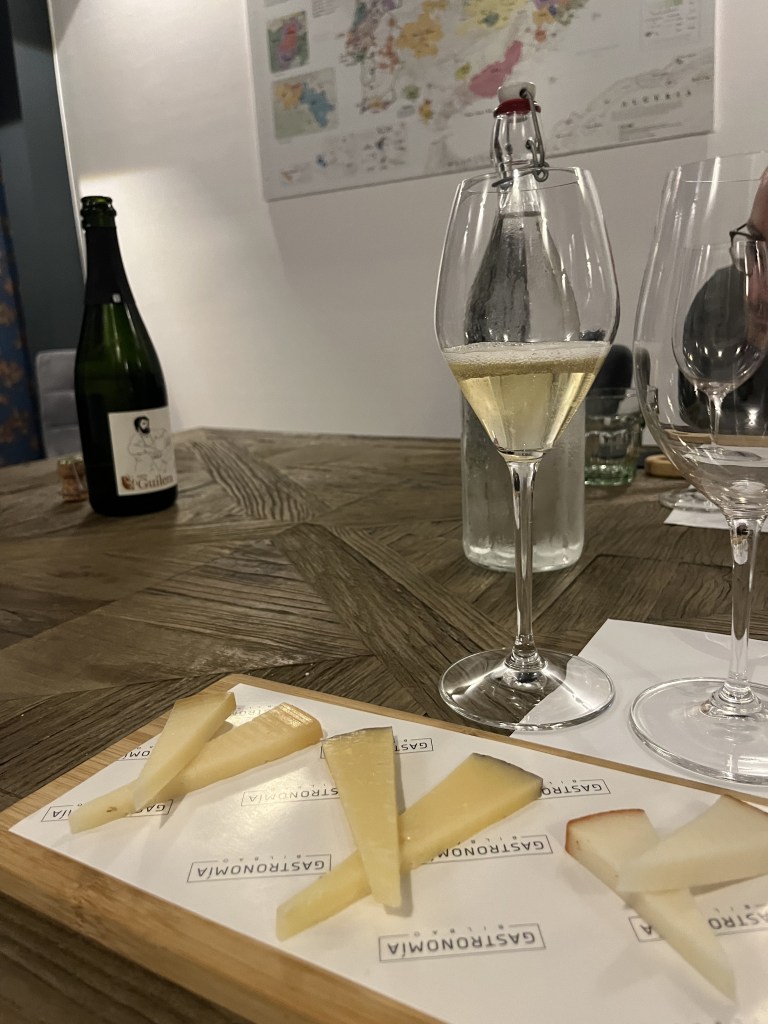
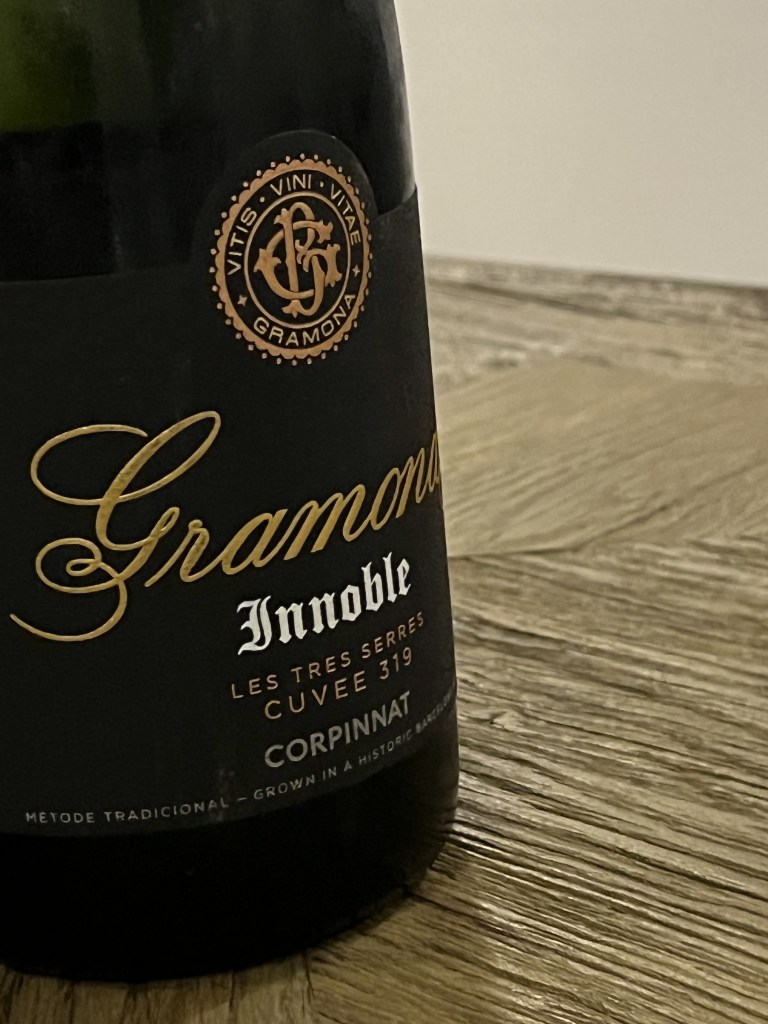
Several other wines followed, paired with the cheeses and cured meats selection; a honeyed white local Txakoli and a deep ruby red Ribera del Duero.

Alex was supremely knowledgeable and so humble and non-judgemental in his teachings, his passion shining through every word on the topic and tossed in with plenty of humour.
Between the three of us, we have been to quite a few excellent wine tastings in the UK and abroad including countries such as France, Spain, Italy, Hungary and USA but we all agreed this was by FAR the best wine tasting we had been to due to how rich the whole experience was in terms of newly acquired knowledge and the quality of teaching and the sublime epicurean delights we had the privilege of experiencing thanks to Alex.
This decision was made even before he left us to enjoy the rest of our evening with the bottles he had opened for the tastings…. on a scorching hot day of 48 degrees celsius, we were a bit shocked and tread carefully with plenty of water, and then pushed the boat out to order some food off his immaculate menu for dinner.
Introducing oysters served simply on ice with lemon and shrimp carpaccio with edible flowers:
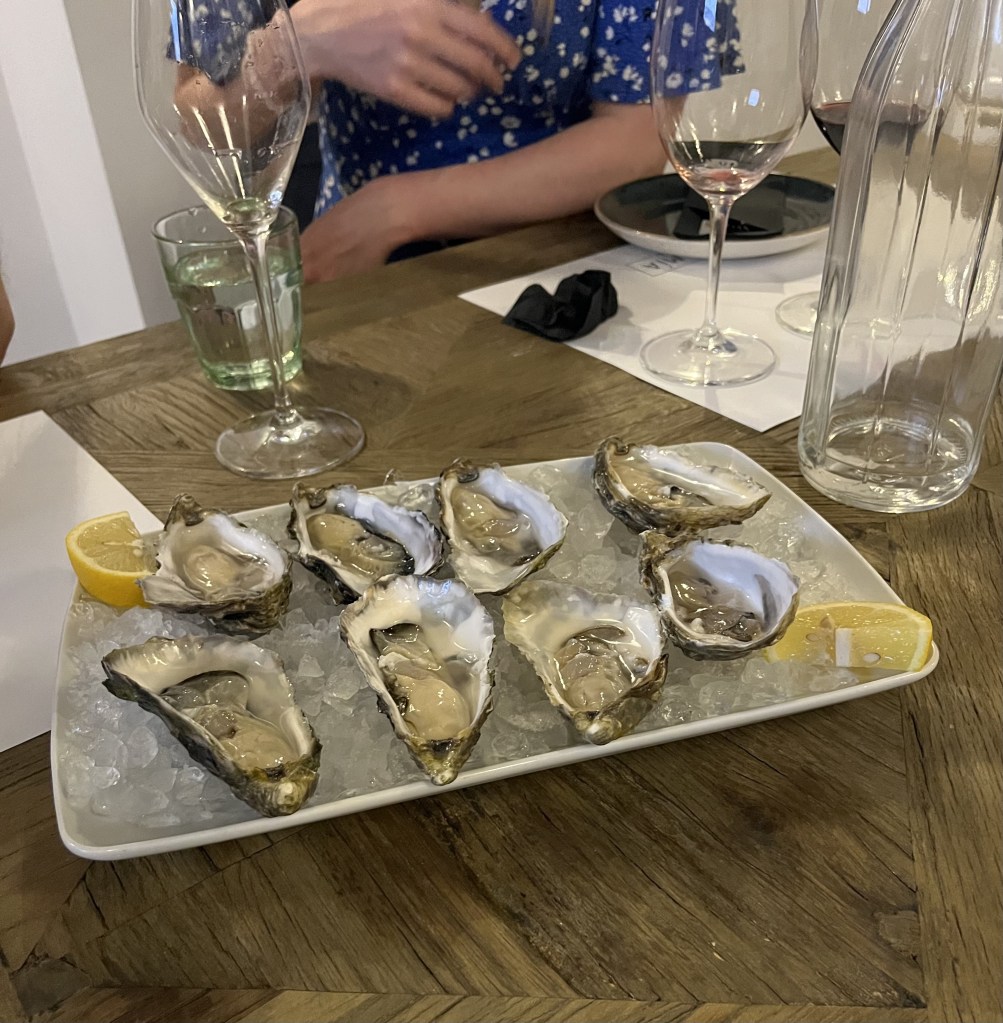

Please believe me when I say that the picture does not even begin to convey how stunning that was. I was a fish and seafood sceptic for many years and when I saw it, I wondered if I would like it, but it was so thin, light, fresh and sublime that it goes down as one of the best things I’ve tried in 2024.
Thank you, Alex, for an evening of luxuriant sensory delights and hospitality we will never forget!
When we finally left the doors of this stunning place, we were let loose to roam the slightly cooled streets and bustling, international bars of Bilbao.
We got talking to Americans, Australians, Germans, Spanish, Basque, French, British and Indian people all with such interesting characters and sharing insights into one another’s cultures.
All good, all chilled, except for a little hint of menace in some drunken dudes who seemed to be looking for a fight for the sport of it all or to chat up and annoy women but were promptly escorted out and away by a really emotionally intelligent-seeming ally of a bar owner.
Suddenly, over all this international jaleo, we heard “it’s the people from the black painting!” in that vaguely familiar Dutch accent. Yes, it was them, our fellow phillistines from the Guggenheim.
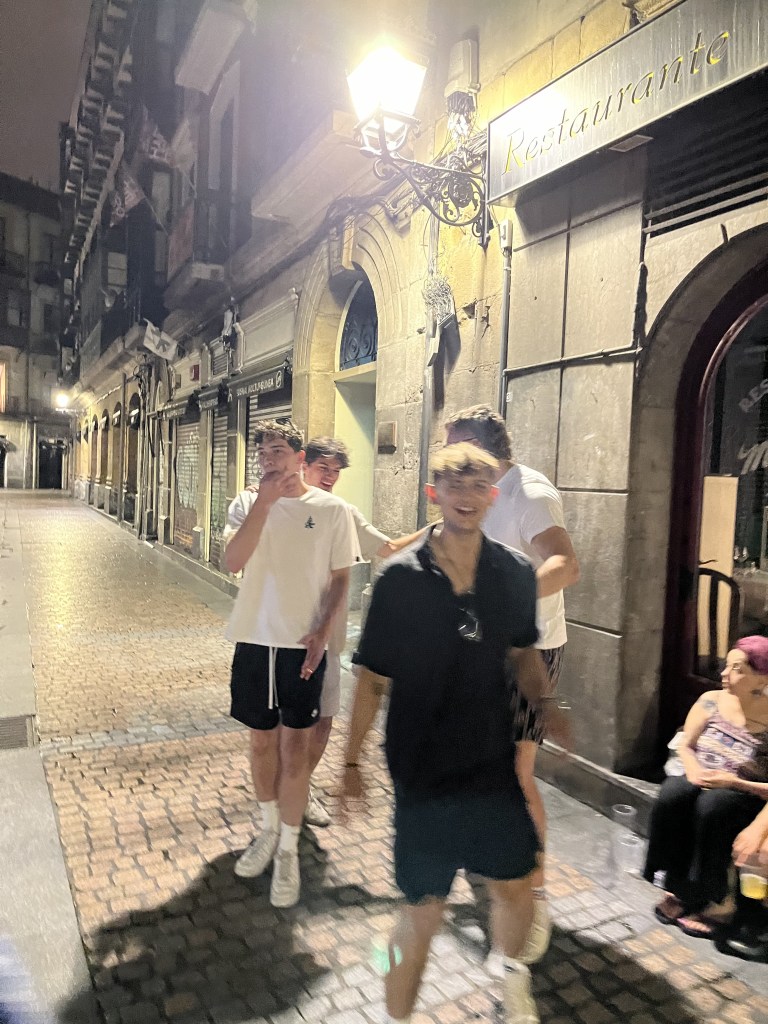
We fell about laughing and proceeded to bar hop together, ending up in some slightly shady club blaring tunes from 2003 by the likes of Sean Paul and G-Unit.
It was a fun and silly, harmless and wholesome way to round off an incredible three days in Bilbao; a modern and international city imbued with art and social progression and a place we would whole-heartedly recommend to anyone, and we have reminisced over it many times since August.
A trip back at some point is definitely on the cards, we aren’t finished with that place yet! San Sebastián and Vigo are also certainly on the wish list!
Have you been to Bilbao? What did you think?
Leave your comments below!
Laura
 Laur On Tour
Pingback: Experience the Magic: The Best Christmas Markets Across Spain | Kiki Journey